
Introduction
The following pages present a major work by Michel Journiac (1935–1995): La Guillotine (Trap for a Capital Execution), created in 1971. Through his installations, performances, and very existence, Journiac consistently resisted the overwhilming manifestations of power. By erecting his own Guillotine—his own trap—through image and language, he turned the ultimate symbol of what Michel Foucault would soon call the “disciplinary institution” into an act of artistic resistance. In light of the resurgence of violence and “capital scenes” today, it seemed opportune to present here a radically opposing gesture—to give space, within these pages, to the work of one of the central figures of 1970s art, whose relevance still “cuts” through to the present.
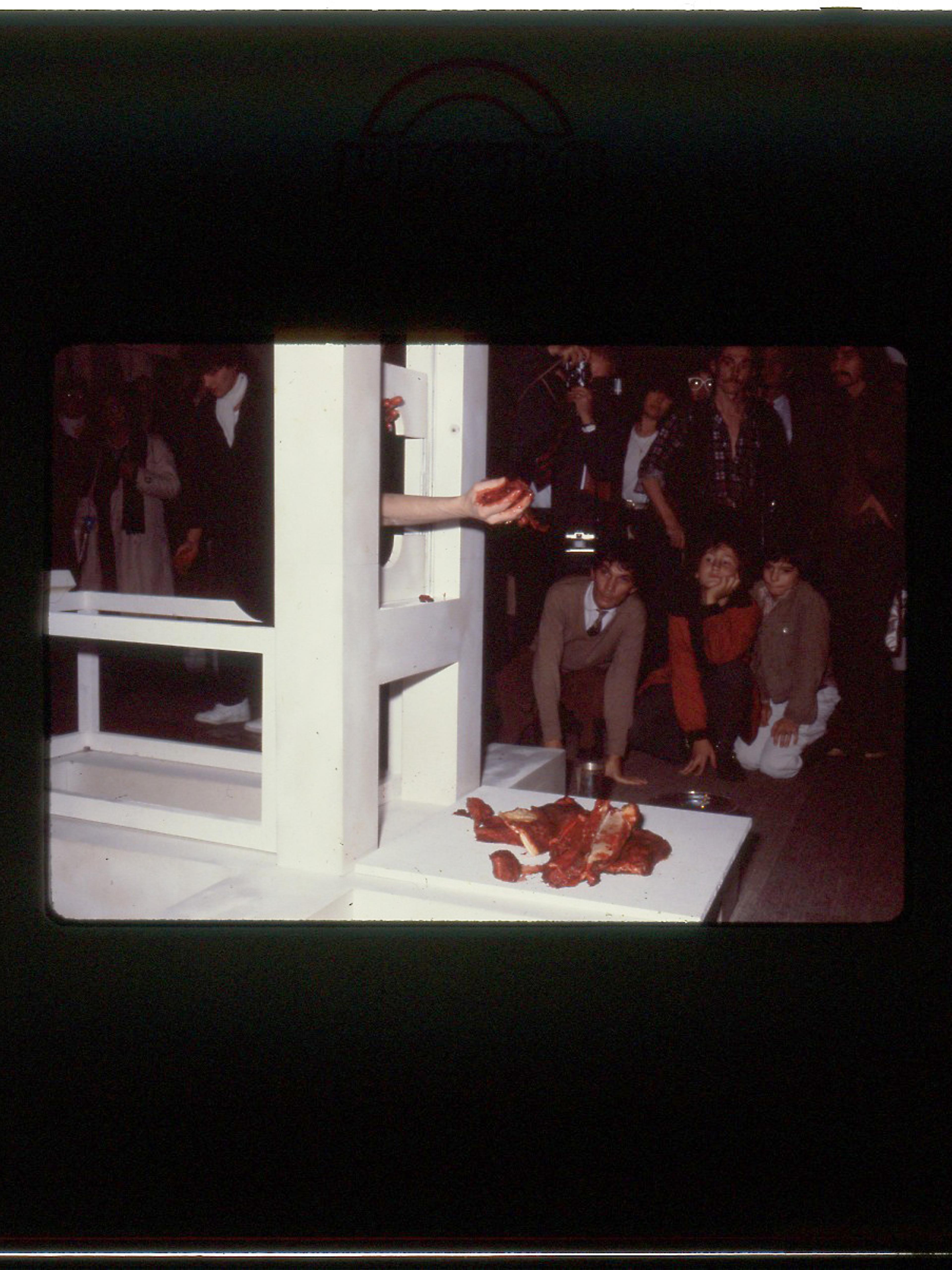
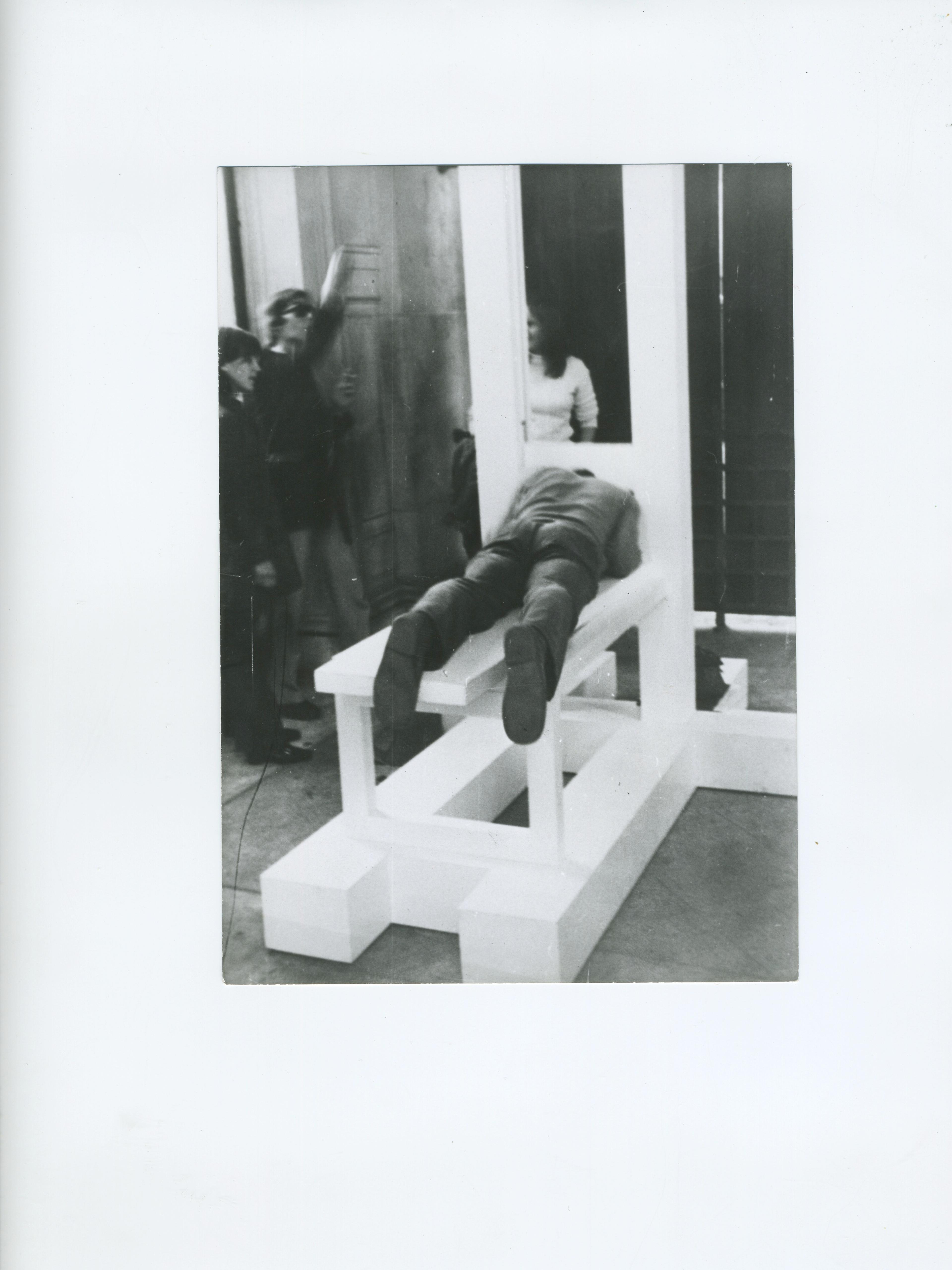
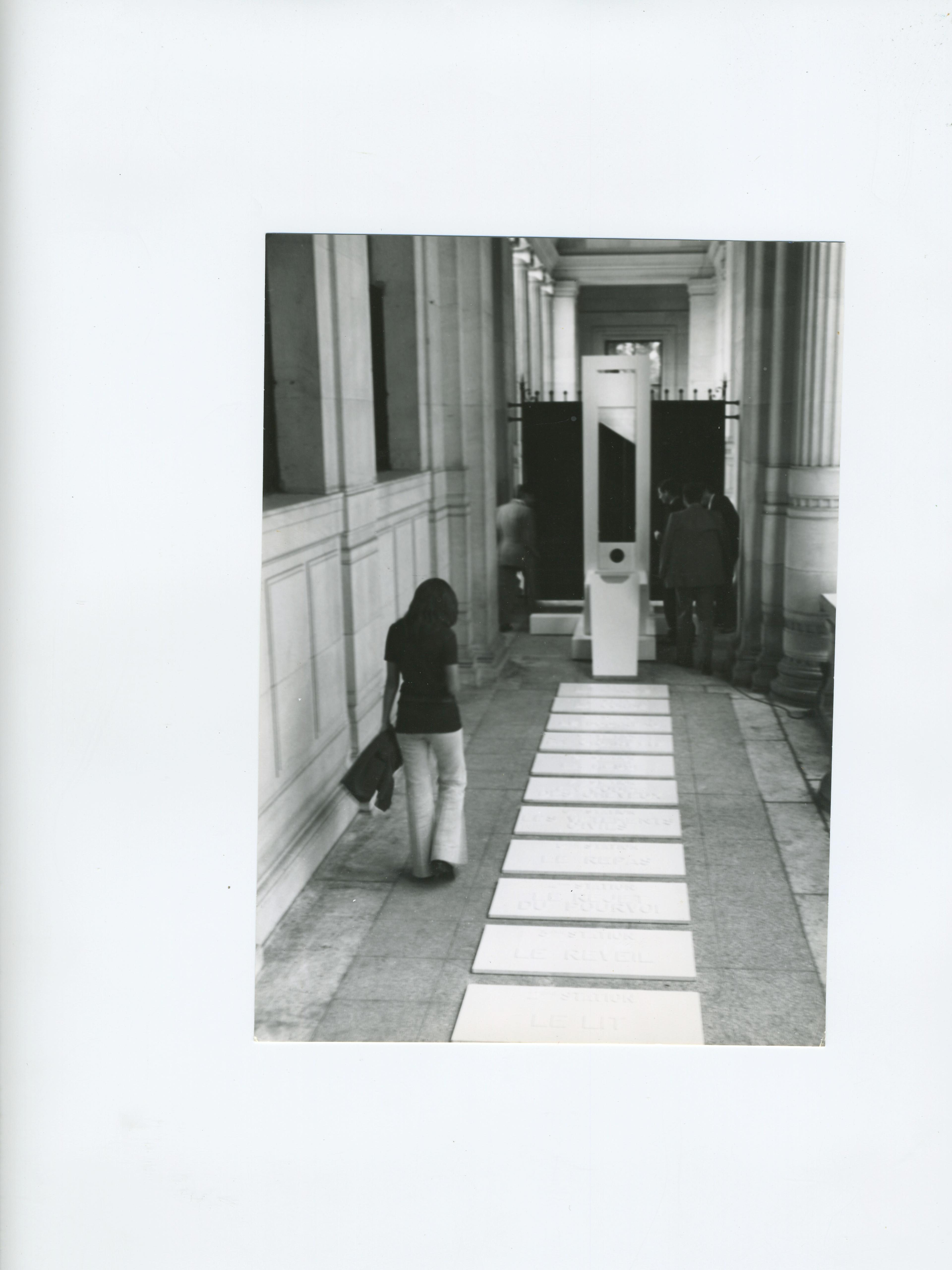
“Art is dangerous […]. It cannot be practiced without risk, but otherwise it is of no interest; it must be, as Sartre said about Jean Genet, ‘the solution we invent in desperate cases.’ This solution is that of every human being, because the creator is first and foremost a pile of flesh that dares to question himself and say NO.” (arTitudes, n°8/9, 1972) Ten years before the death penalty was abolished in France, Michel Journiac built a three-meter-high guillotine in the center of a public institution. Painted in immaculate white, the color the artist used to cover all the objects he created from the late 1960s onwards—to “wash them clean” and neutralize ideologies—the large Guillotine was a symbolic death machine. Designed to be the central piece of the action Piège pour une exécution capitale (Trap for a Capital Execution), the work denounces the violence of state power over individuals, reducing them to a bloodied “pile of meat.” “In the face of the cult of exclusion, death, and the virtual, it is urgent—not for moral, cultural, or political reasons—to oppose the undeniable emergence of the body and of presence.” (Bloc Note, n°6, 1994) The Guillotine is activated by
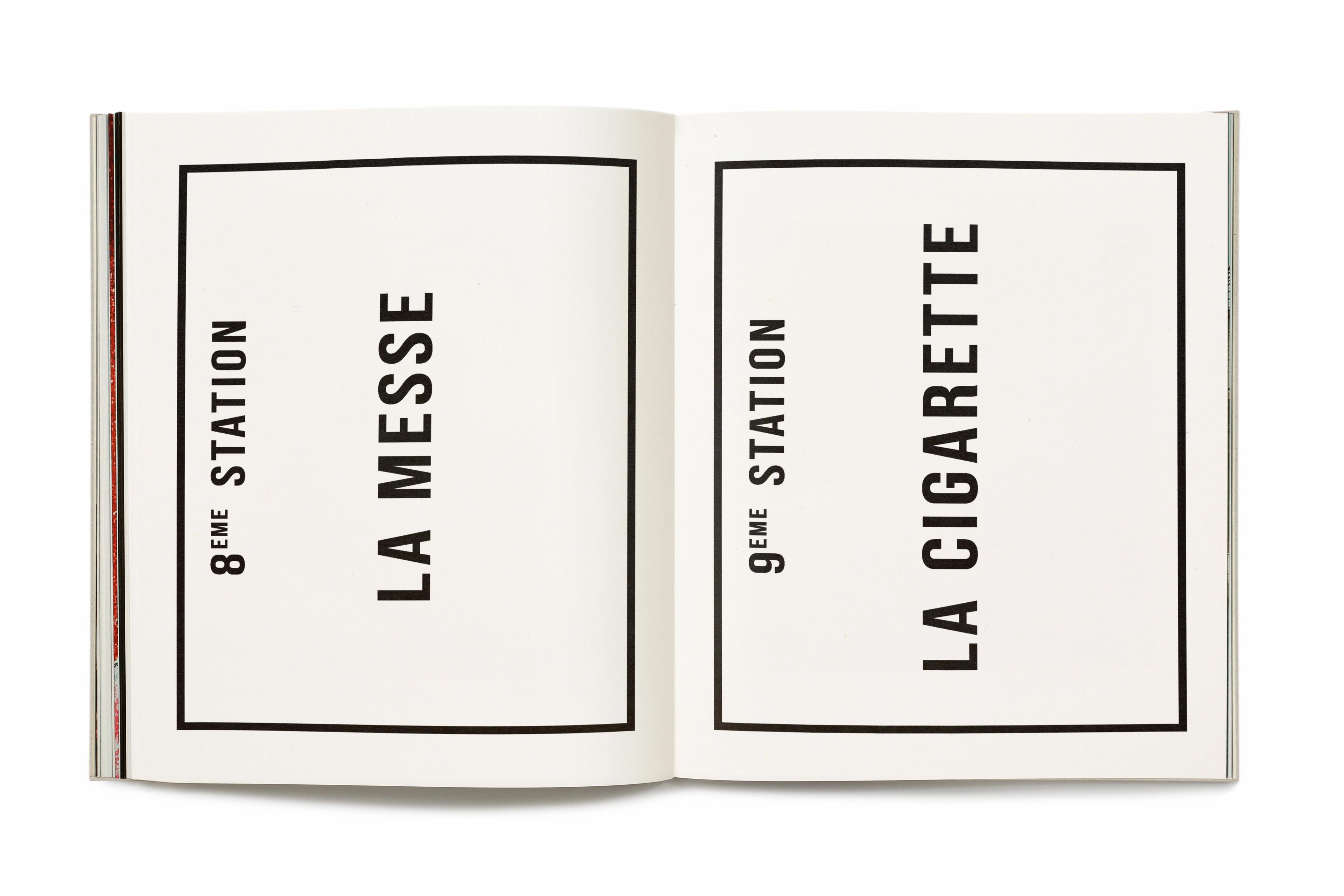
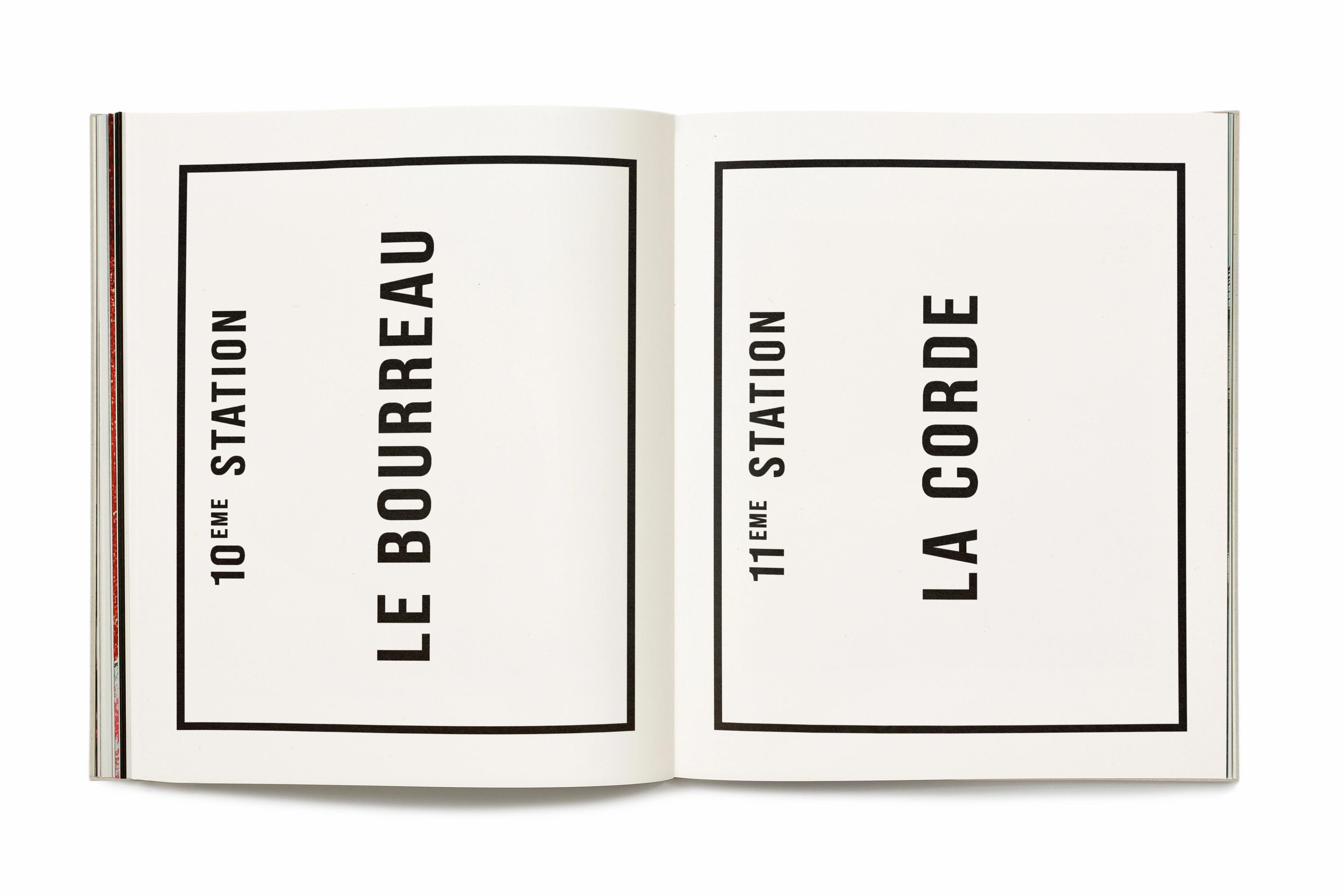
a ritual. After following the stations of the condemned man’s journey, Journiac places pieces of raw meat under the blade, causing blood to drip onto the shiny Formica. The action should have begun in the street, not in a museum, and ended with a television broadcast before the largest possible audience. But it was banned from public spaces and censored by the police: exemplary proof of its highly subversive nature. Michel Journiac is a pioneer of body and sociological art in France. Theobjects, gestures, and rituals that he diverts from their supposed social use act as revealers. They trap reality to stimulate our thinking and create the critical distance necessary for questioning, laying the first stone on the road to revolt. “To take the very means of reality […], to make the object, the sociological given, and the body the language of creation.To reject the practices of the bourgeoisie’s watchdogs and attempt to create [one’s] own signifying practice, to undertake the project of a new semantics, beyond the imposed codes […]. Using a vocabulary common to all to establish the questioning presence of a revolt born in blood, which, beyond censorship and with a hold on the present, could be the first approach to a cultural revolution.” (arTitudes, n°5, 1972)
Credits
Michel Journiac, La Guillotine (Piège pour une exécution capitale), 1971
© Estate Michel Journiac ©ADAGP, Paris, 2025
Courtesy of Galerie Christophe Gaillard