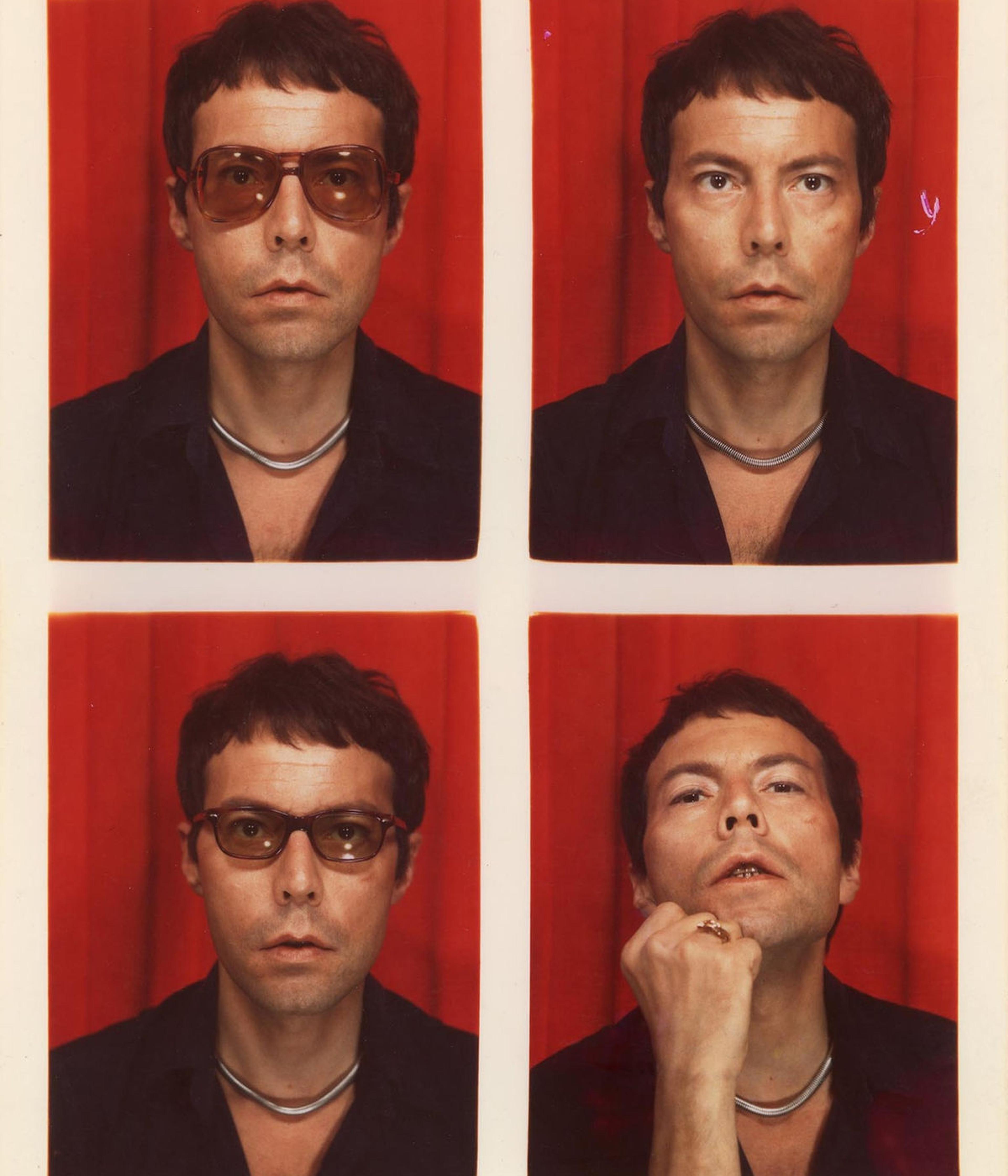
Michel Journiac
Michel Journiac (1935–1995, Paris) was a founder of art corporel, the French strain of body art that emerged at the end of the 1960s. A former seminarian who had studied scholastic philosophy and theology before leaving religious life in 1962, he made the body — and above all his own — into both the material and the subject of his work, treating it as what he called socialized conscious meat: flesh shaped, classified, and disciplined by social and religious institutions. Across performance, photography, installation, and sculpture, he used ritual and provocation to expose those conditioning forces.
His reputation was made with Messe pour un corps (Mass for a Body, 1969), staged at the Galerie Daniel Templon: dressed as a priest, Journiac celebrated a Latin mass and offered the audience a communion of blood sausage made from his own blood. The work set the pattern for a practice built on the détournement of inherited rites. In 1971 he constructed a full-scale guillotine, Piège pour une exécution capitale, as a protest against the death penalty; from 1972 he turned to staged photography, casting himself as his own parents in Hommage à Freud and, in 24 heures de la vie d'une femme ordinaire (1974), enacting in drag a day of stereotyped feminine gestures compiled from women's magazines — a use of the camera that anticipated later artists such as Cindy Sherman. A lecturer at the Sorbonne from 1972, he returned in his final cycle, Rituel de transmutation (1993–95), to questions of mourning and the body, dedicating the work to friends and lovers lost to AIDS.
Journiac's work is held by the Centre Pompidou and the Maison Européenne de la Photographie in Paris, among others. Decades after his death, his interrogation of gender, identity, and the social fashioning of the body has made him an increasingly central reference for contemporary art.