Merry Alpern
Merry Alpern (b. 1955, New York) is an American photographer whose work probes the unstable boundary between public and private life, most often by placing a camera where one is not expected. Trained in sociology before leaving Grinnell College in 1977 to pursue photography in New York, she brings a fieldworker's patience and detachment to subjects usually shielded from view. Her practice descends from the candid documentary tradition of the mid-twentieth century but pushes its premises toward surveillance and the ethics of looking — concerns that placed her at the center of a defining cultural dispute of the 1990s.
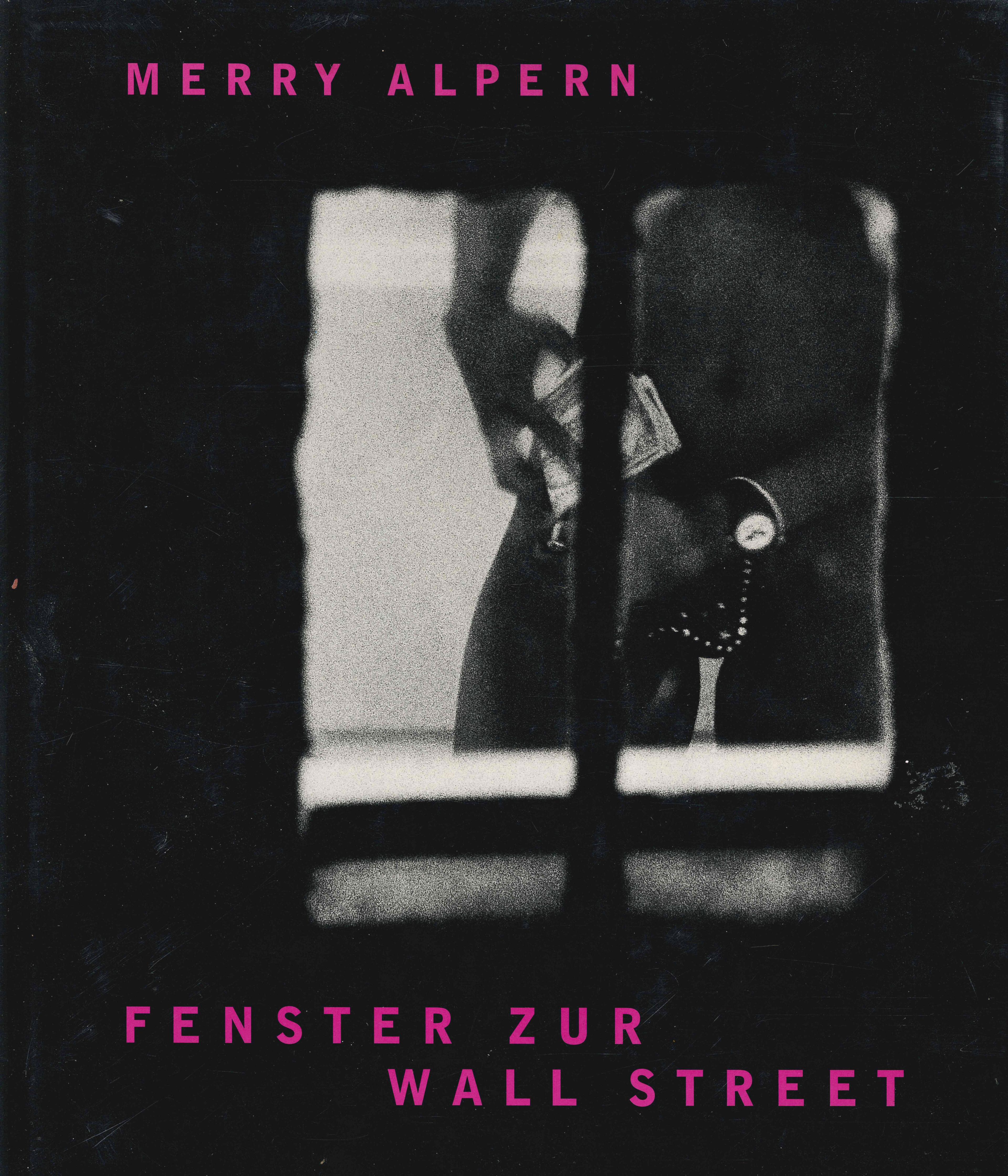
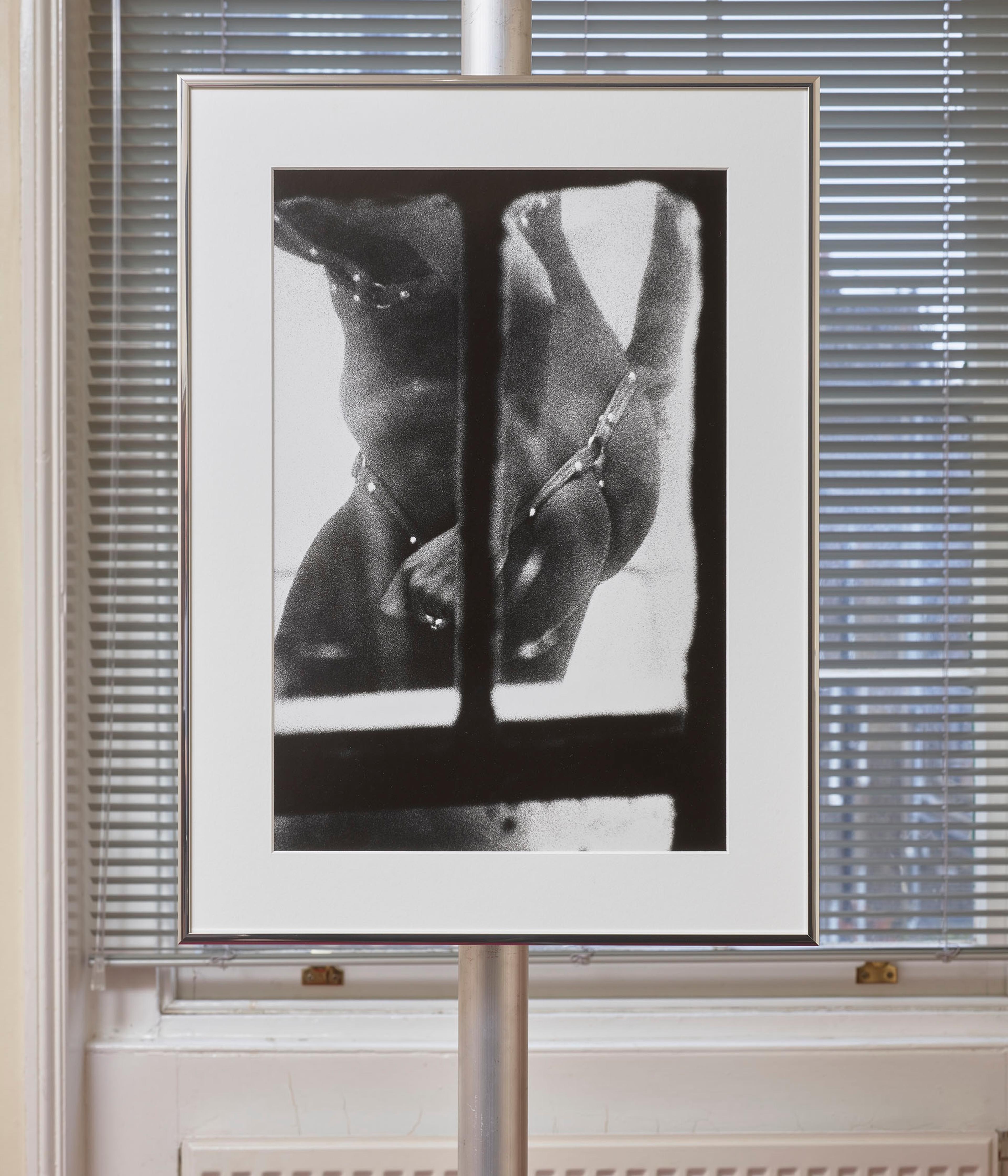
Alpern first drew notice with A.J. and Jim Bob (1987–88), an intimate series following a sex worker and her companion on Manhattan's Upper West Side; the Museum of Modern Art acquired prints, and the work led to her first solo exhibition, at the Camera Club of New York in 1989. Her best-known series, Dirty Windows (1993–94), was made at night through a friend's Wall Street window, looking into the bathroom of a clandestine sex club. Shot on fast black-and-white film and cropped tightly by the window frame, the grainy images implicate the viewer in the act of watching. After a National Endowment for the Arts panel recommended her for a 1994 fellowship, the agency reversed the decision — denying awards to Alpern, Andres Serrano, and Barbara DeGenevieve alike — in an episode that came to epitomize the era's culture wars over public arts funding. She extended these questions in Shopping (1997–99), filmed with a camera hidden in a perforated handbag inside department-store fitting rooms, where consumption becomes its own theater of private desire.
Both series were published by Scalo, and her photographs are held by the Museum of Modern Art, the Whitney Museum of American Art, the San Francisco Museum of Modern Art, the Los Angeles County Museum of Art, the Museum of Fine Arts, Houston, and the Fondation Cartier pour l'art contemporain, among others. Decades later, her work reads less as provocation than as an early reckoning with a culture saturated by cameras, anticipating present-day questions of consent and visibility. She lives and works in Brooklyn.