Introduction
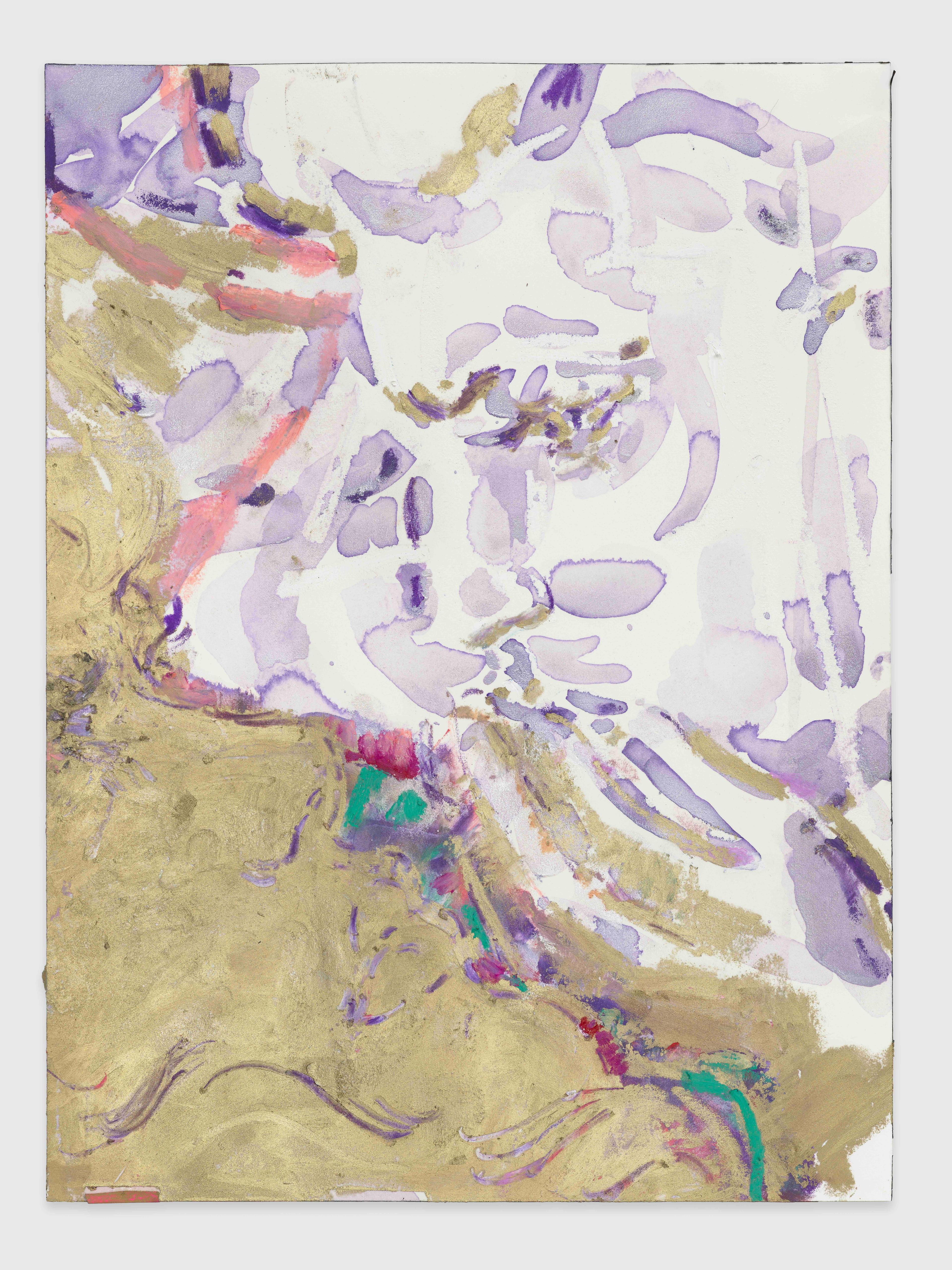
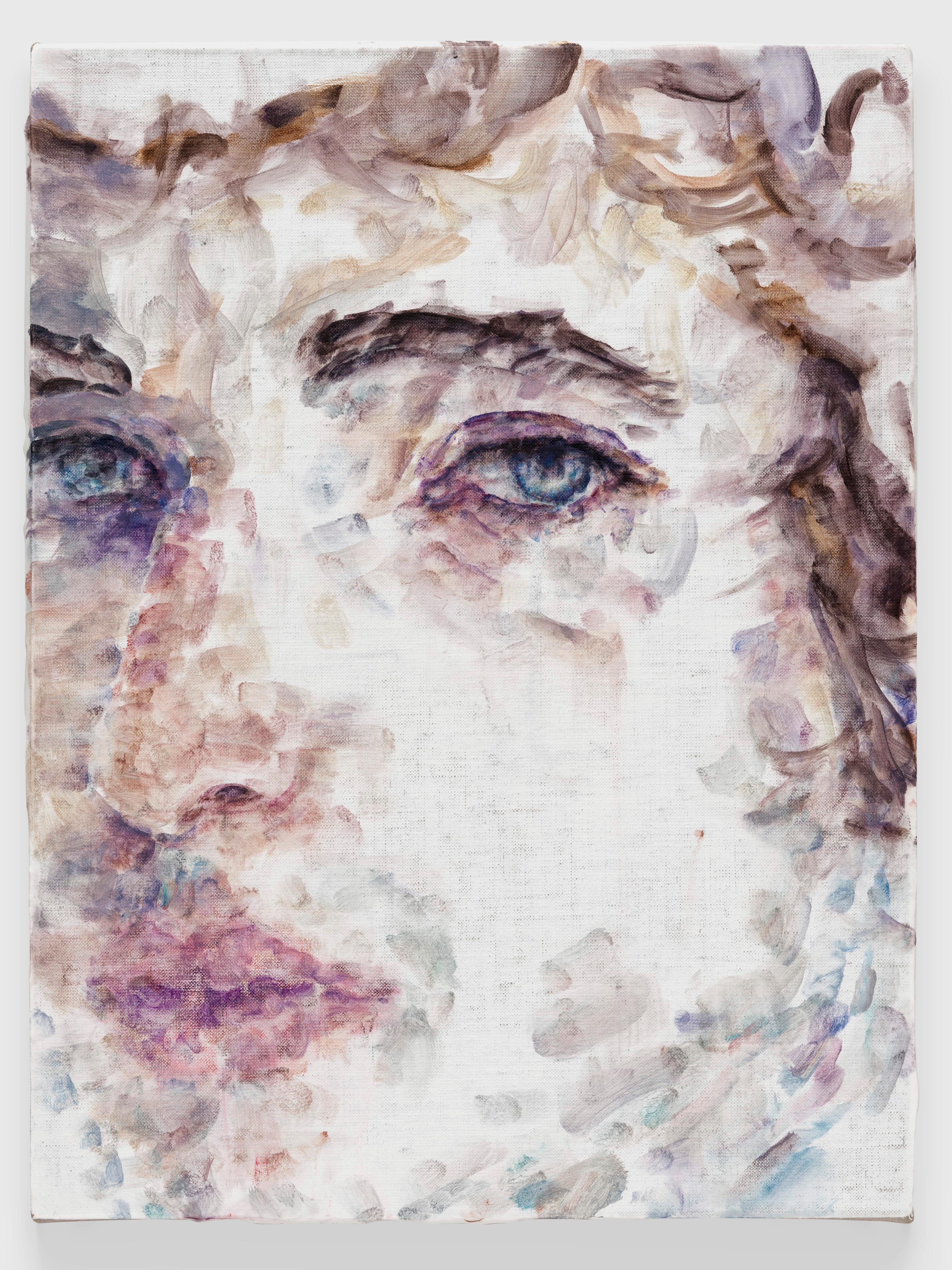
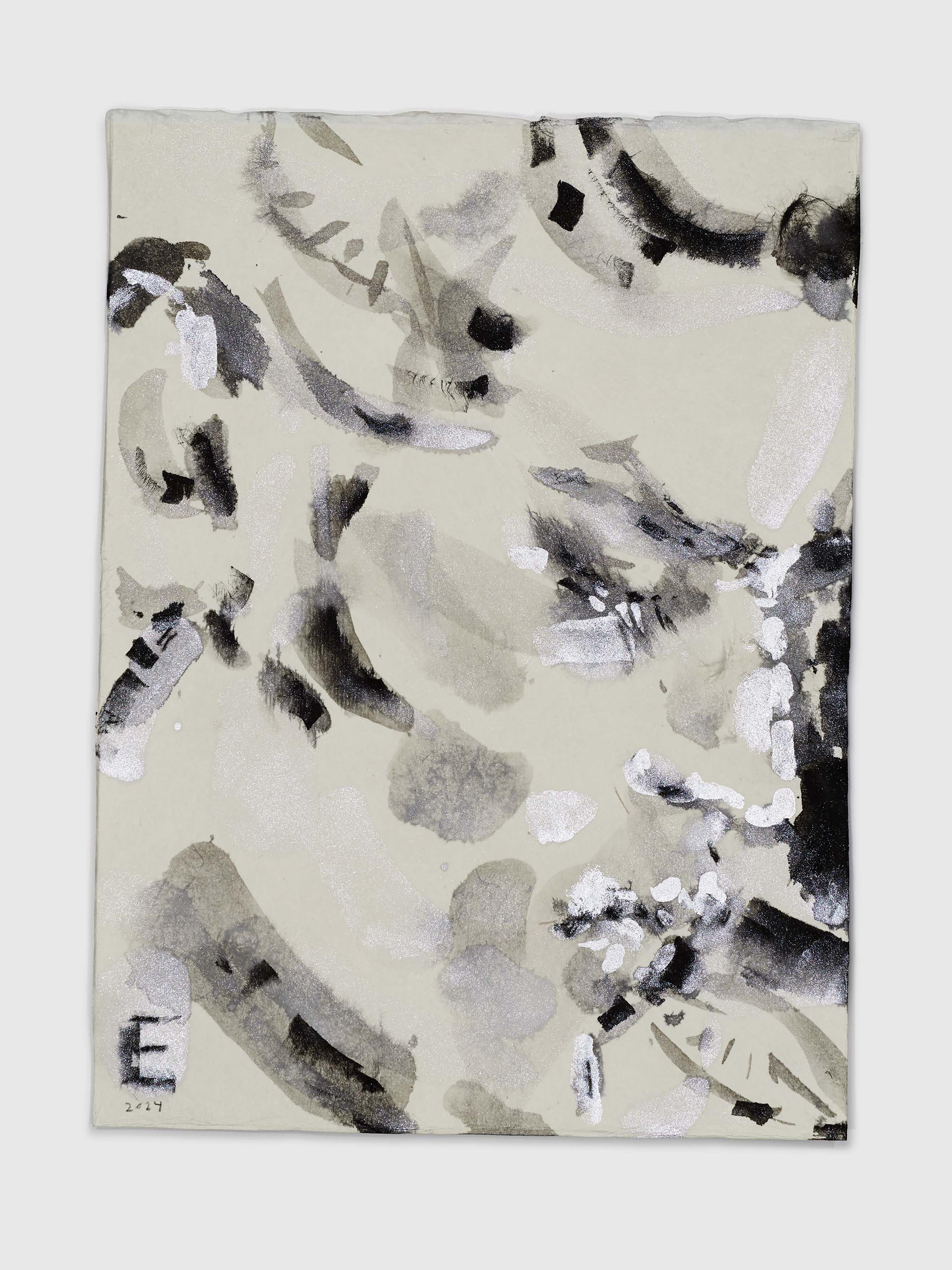
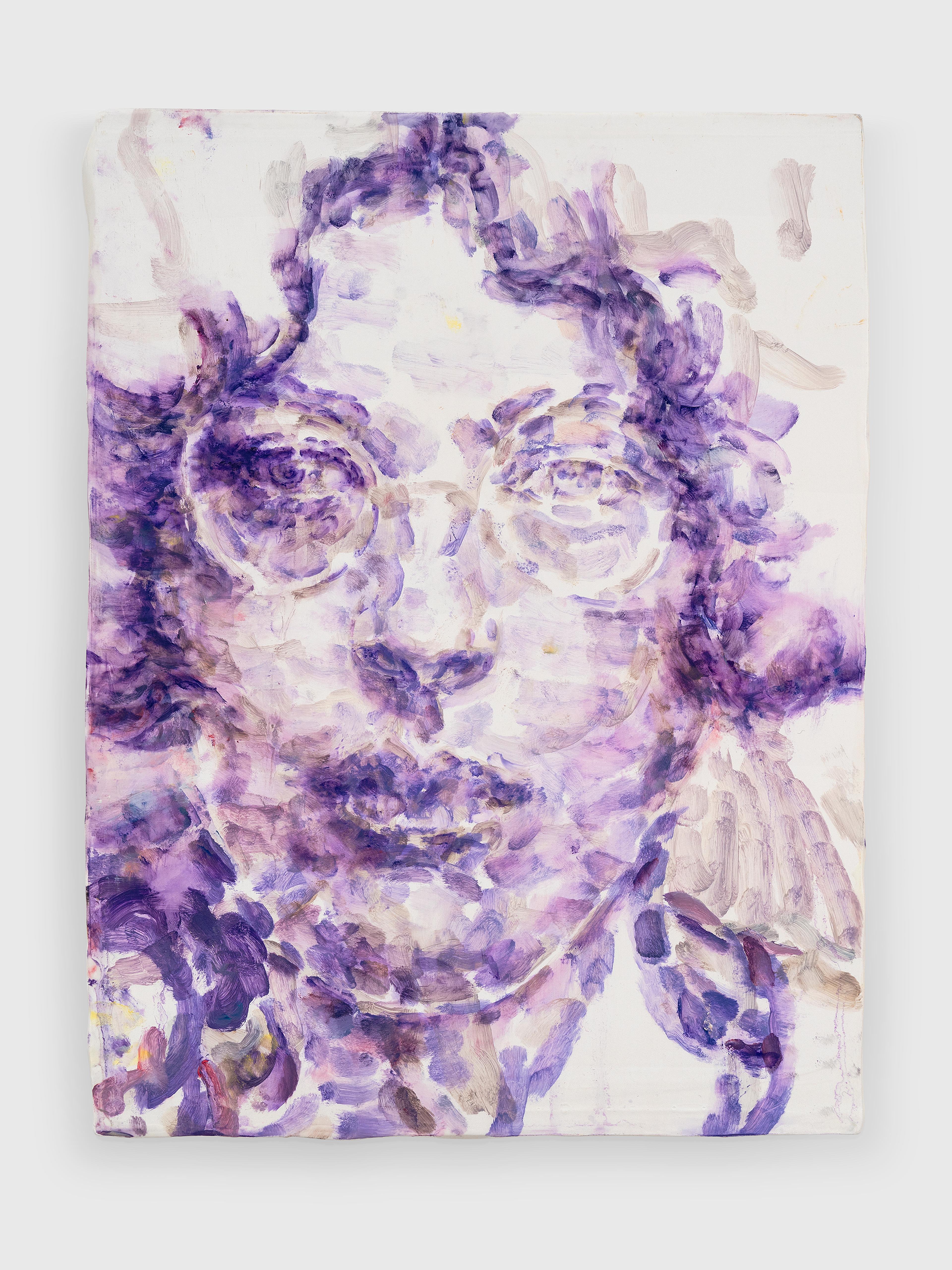
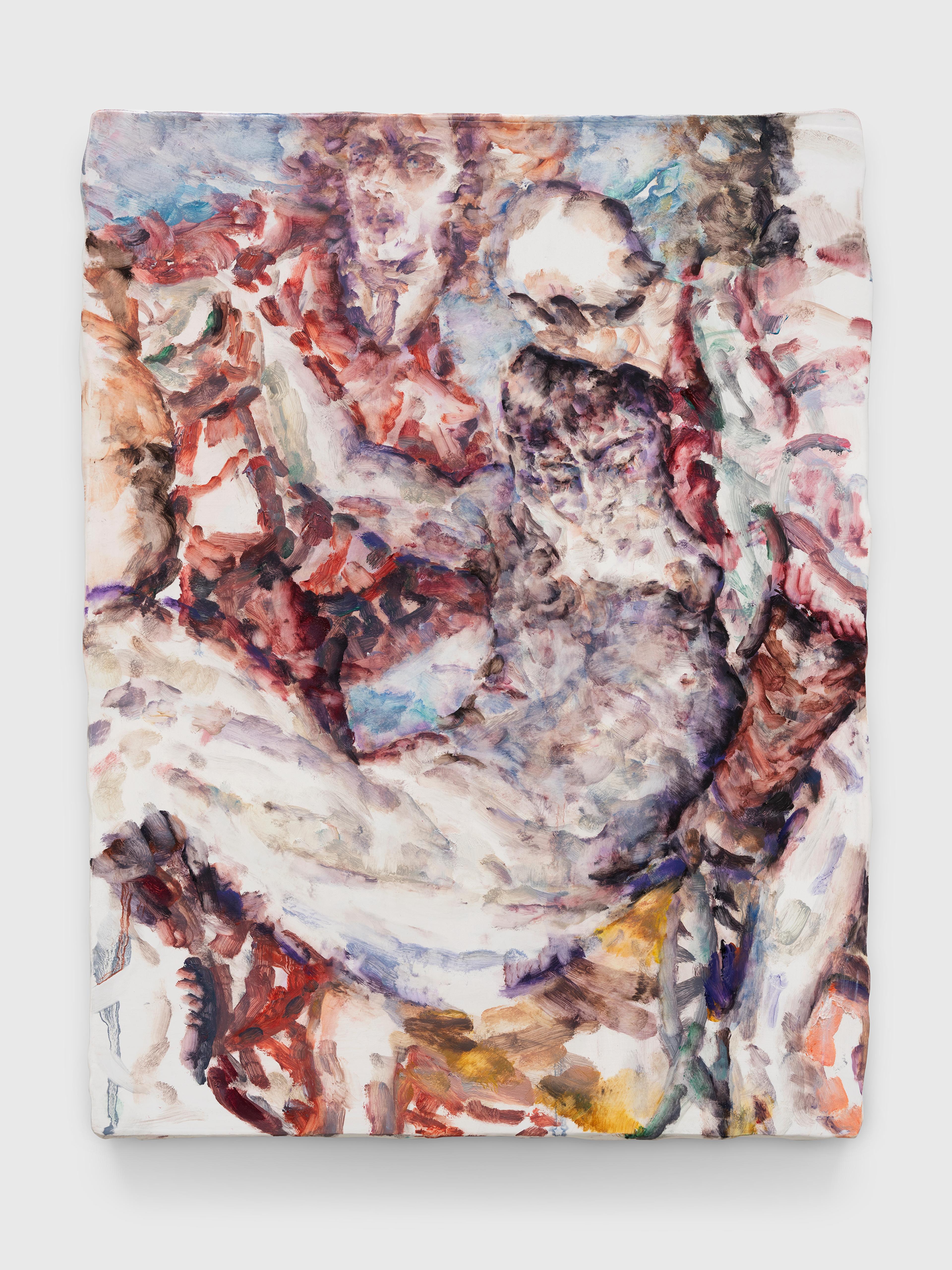
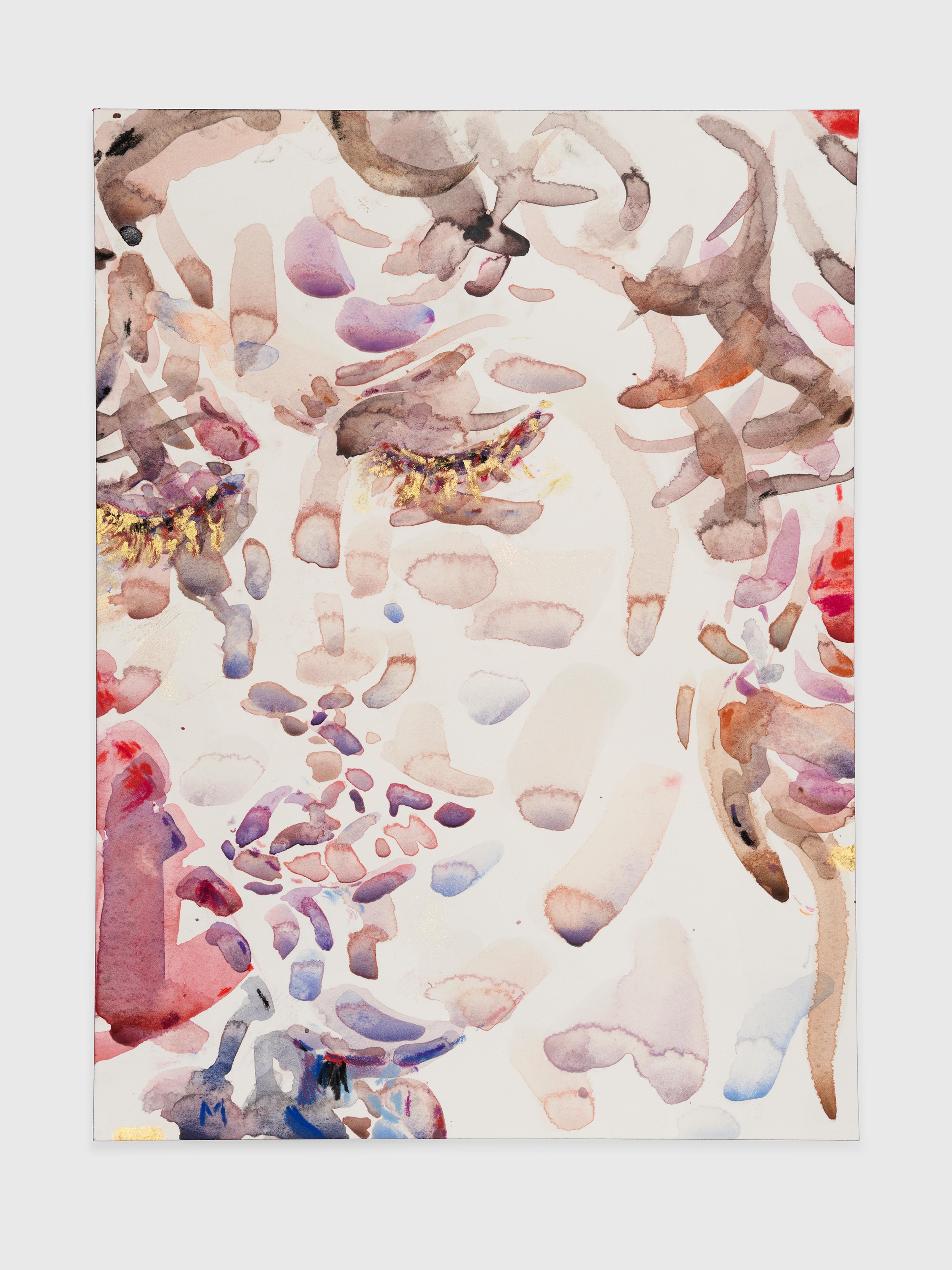
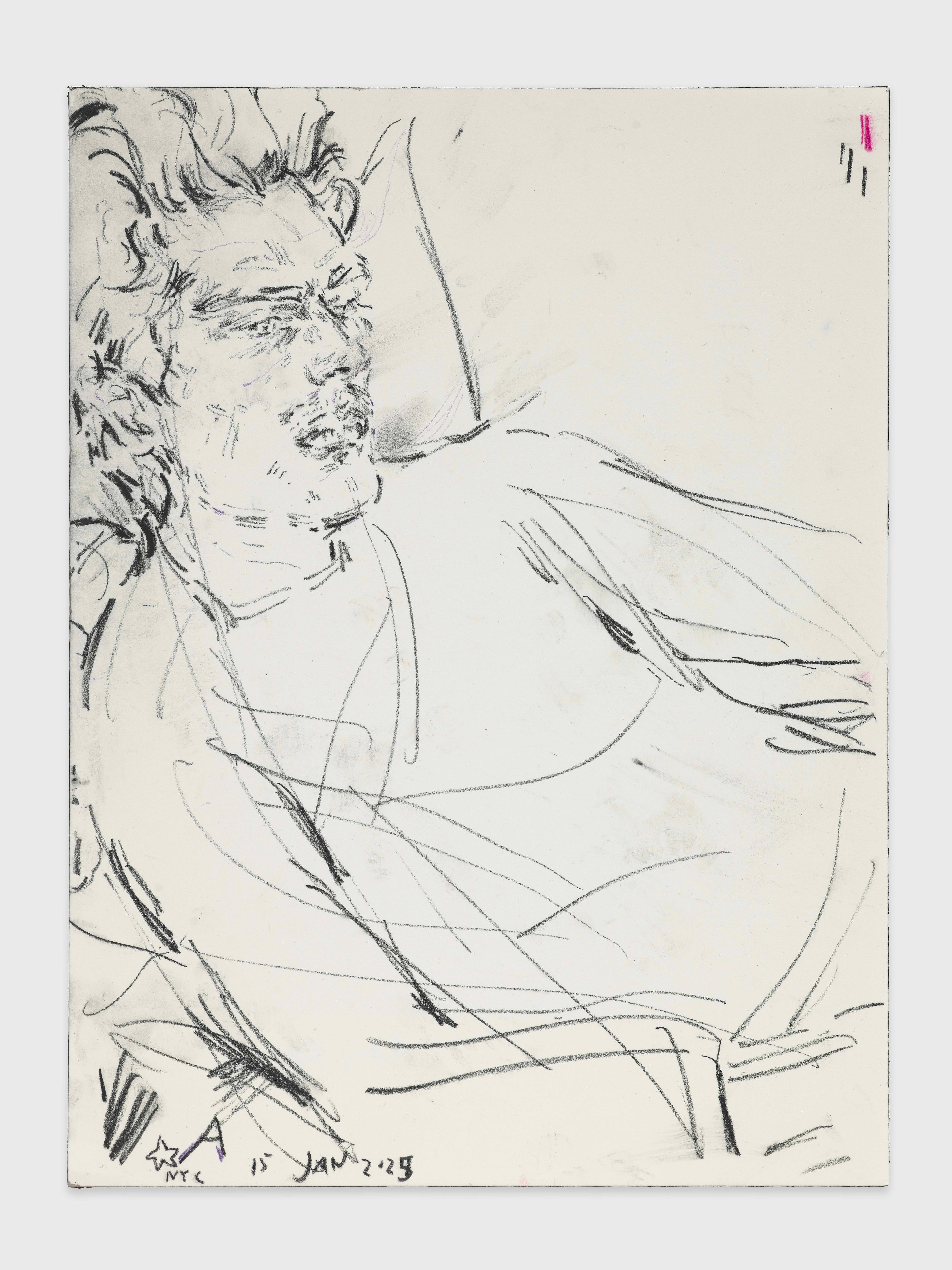
Since the 1990s, Elizabeth Peyton has occupied an essential place in contemporary painting. Through her portraits, she restored to the face its power of appearance and established herself as one of the leading artists in the renewal of figuration. In this new series of paintings and works on paper, historical figures and familiar visages stand side by side: Simone Weil, Elvis Presley, Bob Dylan, Mica Levi, and some of her close friends. But also visions drawn from her life in Paris: the Sarpedon from the Musée d'Orsay, Titian's Entombment of Christ at the Louvre, or Mary Magdalene inspired by an 1876 stained-glass window in the Church of Saint-Séverin. As if each face, whether past or present, sacred or familiar, carried within it the immediacy of the present and the eternity of memory. Elizabeth Peyton does not expand the field of painting she narrows it. She concentrates the entire history of painting into that minute and inexhaustible territory that is the face—into the infinite exploration of the figure of the other, where the enigma of presence is replayed each time anew.
It was a July afternoon. We met in front of the Church of Saint-Etienne-du-Mont in Paris's fifth arrondissement. On the western façade, above the portal framed by fluted columns, a niche holds the statue of Saint Geneviève, placed beneath the martyrdom of Saint Stephen. Legend has it that in 451, during the siege of Paris, Geneviève— barely twenty-eight years old—saved the city from the Huns' invasion. To the assembled Parisians she addressed these words, which have endured across the centuries: "Let the men flee, if they wish, if they are no longer able to fight. We women will pray to God so long and so fervently that He will hear our supplications." I have been steeped in this legend since I was a child. On that day, I arrived a few minutes early. I waited, under a blazing sun, facing the church and the façade I had known all my life. But for the first time, I was seeing Saint Gen-eviève. I imagined her kindness, her piety, her charm; for an instant, my mind confused the idea I had of the person I was about to meet with the legend of the saint.
I had met Elizabeth Peyton a week earlier, at Brasserie Lipp. I recall very little from that evening. The reflections of the lights on the polychrome faience tiles, the brown moleskin banquettes, the faint gleam of Belle Époque woodwork, the mirrors set between Léon Fargue's ceramic panels, multiplying perspectives and prolonging the murmur of conversation. I remember the happy bustle of the diners. A slender silhouette walked through the door, turned right, and came toward me. That is how I first met Elizabeth Peyton. She told me she had been living in Paris only a short while, and that she liked to visit its churches. The name Magma, she con-fessed, had intrigued her. We spent the evening talking. A few days later, we met again at the Church of Saint-Étienne-du-Mont. From that day on, we never parted. Out of this closeness grew a bond that eludes the categories of friendship or complicity—something quiet enough not to need saying, yet dense enough to withstand any distance.
One day, as we were walking in Paris, we decided to go and see the oldest tree in the city, standing across from Notre-Dame. We share this passion for trees-for their company, their tenderness, for the centuries they carry in their bark. Elizabeth had asked me to write about her work. At first, I said no. The task felt daunt-ing. So many voices, more learned and more legitimate, had already spoken about her. What could I add? Only later did I understand that what I could offer was not a critical commentary, but a witnessing. I had been, by turns and in the same instant, the subject, the object, and the witness of a moment almost impossible to translate: the experience of being painted by her. Sitting after sit-ting, that experience took root in my life. I could not say how many times I sat before her—nor how many times I thought, mistakenly, I knew what to expect. I remember a day when I met her in the West Village. That morning, the neighborhood exhaled the smell of coffee from people bustling through the streets before the day began. The light, already high, wrapped the city in a liquid glow. I left the avenue and turned into one of the few streets that betrays New York's obsession with the right angle: here, the line curves, and the façades seem to have agreed to defy the grid. At the bend in this infidelity to the city's plan, a small mansard-roofed house appeared, almost shy behind its foliage. This is where Elizabeth paints. Her studio occupies the entire floor. Light enters through large skylights. From a speaker, the voice of Bob Dylan or Elvis drifts, barely louder than a sigh. Elizabeth often paints to music, as if she were seeking to reach painting through another sense. On a table, a few canvases have been patiently prepared: layers superimposed, sanded down until they are smooth as glass.
I wanted something to happen—immediately. From my very first sittings a few months earlier, my impatience betrayed me: I wanted the portrait to unfold before my eyes. Elizabeth would smile and say, "It's already happening." Painting is only one instant of the portrait; the portrait is an exploration that begins long before the canvas. She says this without malice. It's true: the portrait began yesterday, in the street; it began last week on the telephone. And then, as she searches, reworks the curve of an ear, the line of an eye, the turn of the nose, a wayward strand of hair, a flower in the background— there comes a mystical shift. One must begin again, let it fail, let it stumble, let it fall short of translating into something-and then, suddenly, everything tightens. My gaze no longer knows whether it is seeing or being seen. There is the intensity of a love without possession, the charge of a desire without indiscretion—a near-ritual respect that protects you even as it reveals you. It isn't voyeuristic, for nothing is more respectful than the gaze of a painter seeking the truth of your being. It is violent and tender at once. I have never encountered another attraction so powerful between two beings—which is not love, which is not desire, yet in both cases, it is not devoid of them. Each sitting teaches the model being painted that he is only one element of the painting. That the movement of the hair is a vibration from music heard a few hours earlier. That the intensity of the color lighting the face says something of the light at sunrise, suddenly returned to memory. That what is enacted in painting is a phenomenological synthesis of the experience accumulated between these two beings. Some time after our first meeting, I had given her Geschichte Aegyptens by James H. Breasted. Published in German in 1936, this volume had passed through singular des-tinies: Freud regarded it as decisive, and Lucian Freud received a copy at sixteen—he kept it all his life; it is the only book to appear in his work. Long afterward, looking at her monotypes and the way she recentered the face on the copper plate, it came back to me. Something was connecting. This book, which had passed through other lives and other gazes, became in turn a witness to my own.
While so many painters have drawn their material from landscapes, epic scenes, battles, or genre scenes, Elizabeth Peyton concentrates, condenses, and coagulates, in the sole pursuit of the face, the entire history of painting. Through the infinite, almost ontological exploration of this minute and inexhaustible territory, she restages painting itself. Spinoza once wrote: "The entire idea of the sea is in a single drop of water." In Elizabeth Peyton's work, the entire idea of painting is in a single face. There is, in her commitment to understanding the figure of the other—in the emotion of a gaze, the curve of a smile, the rhythm of a breath—a metaphysical conti-nent. The sitting goes on; silence settles in. She looks, and I understand that what she seeks is not a matter of preci-sion, but the truth of being-that which, today, in fatigue, in joy, in trembling, makes this face mine and not that of another. I then discover the secret law of these hours, the very architecture of presence. I sometimes see her linger in silence longer still. She looks.
I first discovered her work in a monograph published by Phaidon, its black and white cover a depiction of Al Gore. I must have been seventeen or eighteen. I remember that moment vividly. I was listening to Pale Blue Eyes by the Velvet Underground, leafing through the pages as the song repeated its incantation like a wave: "linger on your pale blue eyes." That line—prophetic— became, for me, the invisible key to her work. Lou Reed made it an avowal of fragility and fascination; Elizabeth Peyton has made it a modality of painting. Where Michelangelo brought terribilita to its sculptural peak— holding the viewer's gaze by force, she chooses to invert its scope and its charge, to transfigure that gaze through love. I rise at last. Dizzy, I no longer know whether I have been "faithful" in likeness. And this is a release. The portrait is the experience of an encounter brought into the present, the archaeology of an instant that goes beyond the sitting. Each time, the same thing happens: something comes forth to meet you. Who can say why a work meets us? We almost never ask ourselves this question. It is always the story of a deliberate discovery, a spectator going toward the work. Rarely the reverse: the idea that a work might come toward us. And yet, in that instant of disorientation when one believes the order of the encounter has been reversed, there is, I think, a form of lucidity. For there exists a sort of grace by which a work chooses you. Being painted by Elizabeth Peyton has taught me this paradoxical truth: we do not go toward painting—it comes from afar, and, one day, it recognizes you.