
Introduction
With Michelangelo Pistoletto, the mirror is never exactly a reflection. Through his Mirror Paintings, the artist has spent decades questioning the role of the viewer, their visibility, and the inscription of the present into the image. Here, the founder of Arte Povera returns to this foundational gesture—but alters its scale. What is usually the entry point through which the viewer’s body enters the work becomes, in these pages, the place where we encounter our own face. The scale may have changed, but the transfiguration made possible by the mirror remains intact. These two Mirror Paintings, each depicting the hand in a different position, are no accident. They recall the cave paintings of prehistoric times—blank walls of the first days, where the earliest humans, pressing the imprint of their hands onto stone, became aware of their own existence in the world. Pistoletto reveals here an ancestral gesture in the history of art as the culmination of a reversal. Art is no longer a bestiary, no longer a reproduction of the visible world. It becomes an assertion of identity, a reflection of human presence that sees itself—and, in doing so, sees the other, face to palm. In his exploration of the face, the philosopher Emmanuel Levinas once wrote: “No face can be approached with empty hands and a closed house.” Pistoletto opens the doors—and extends his hand.
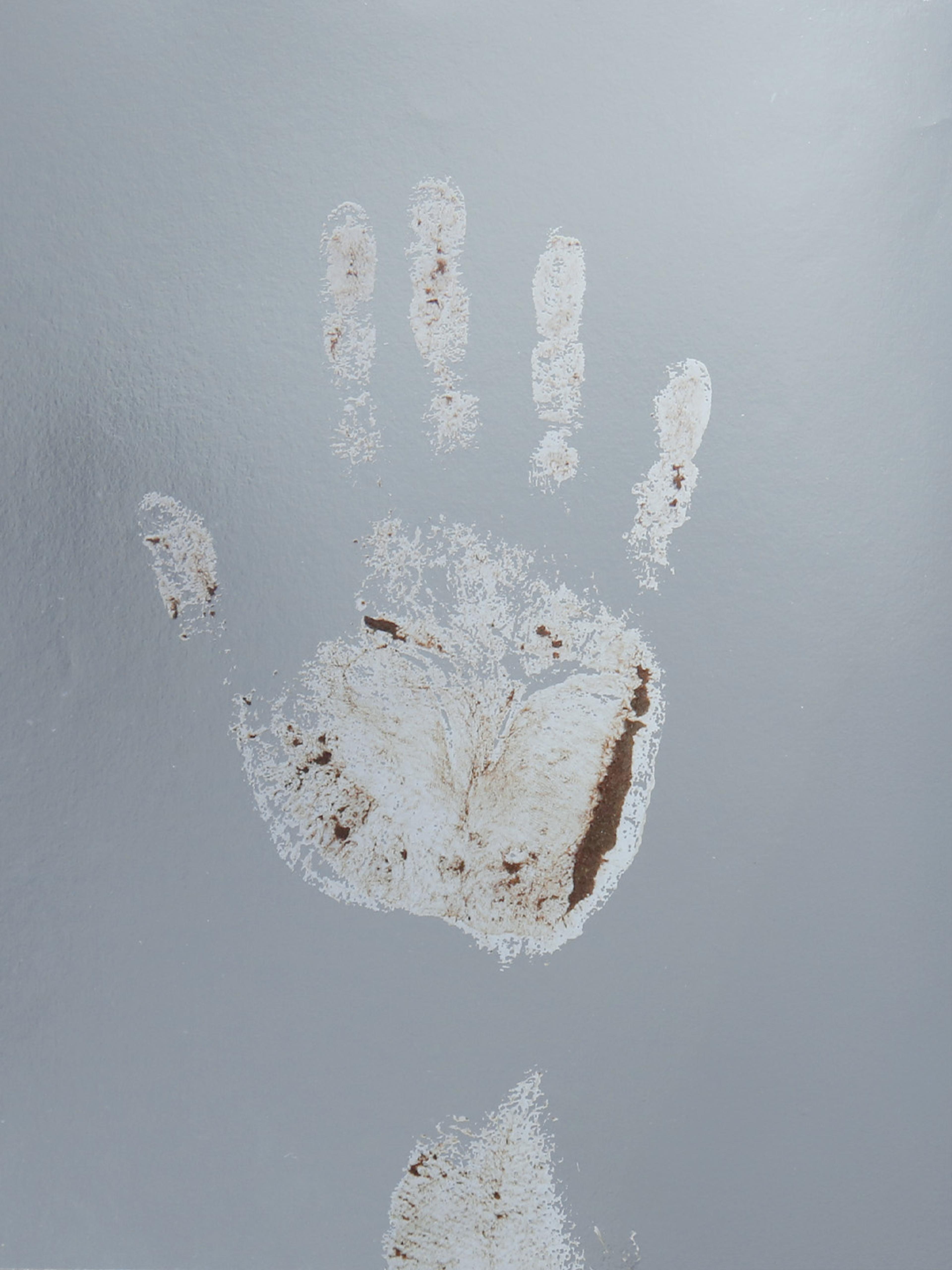
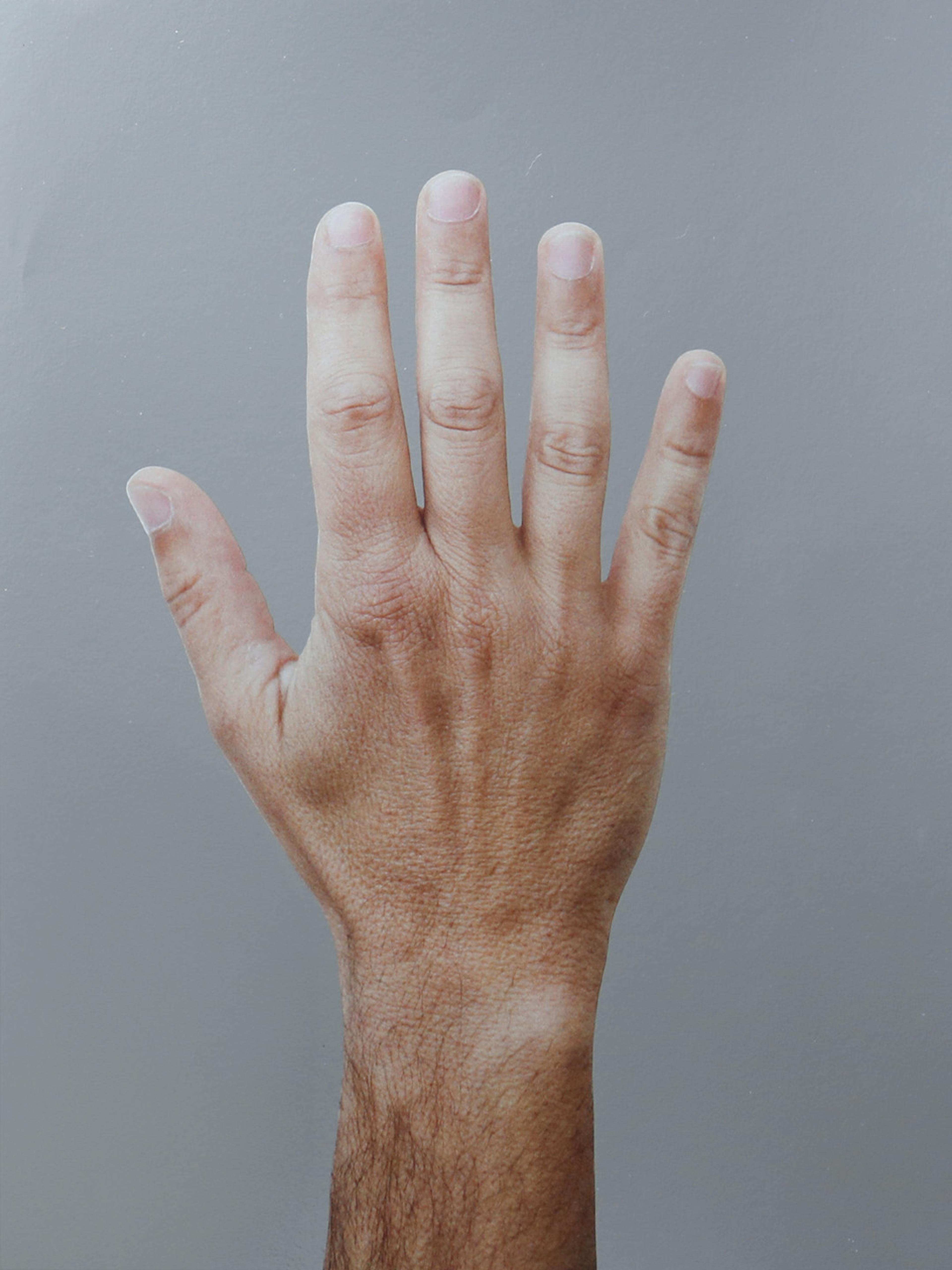
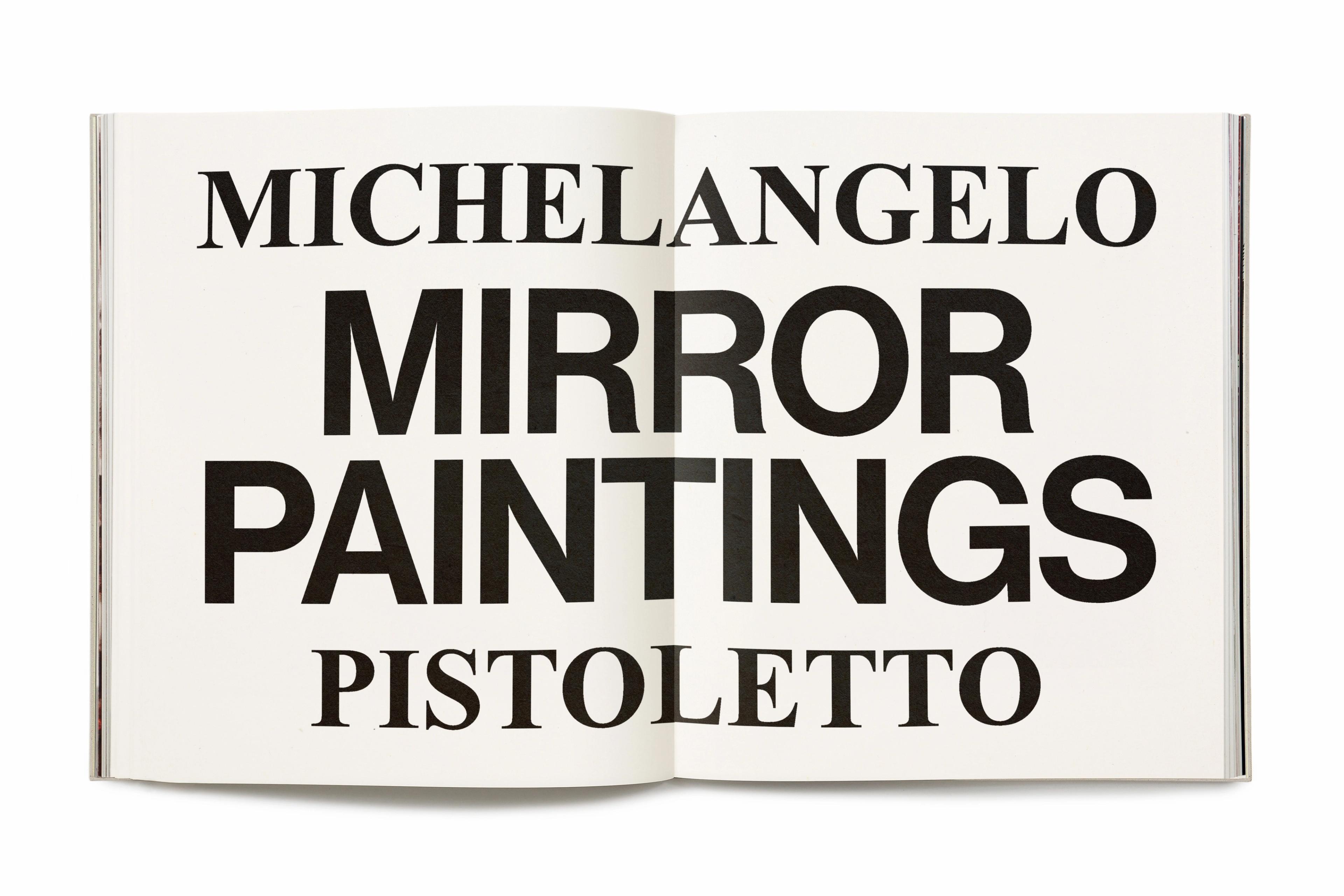
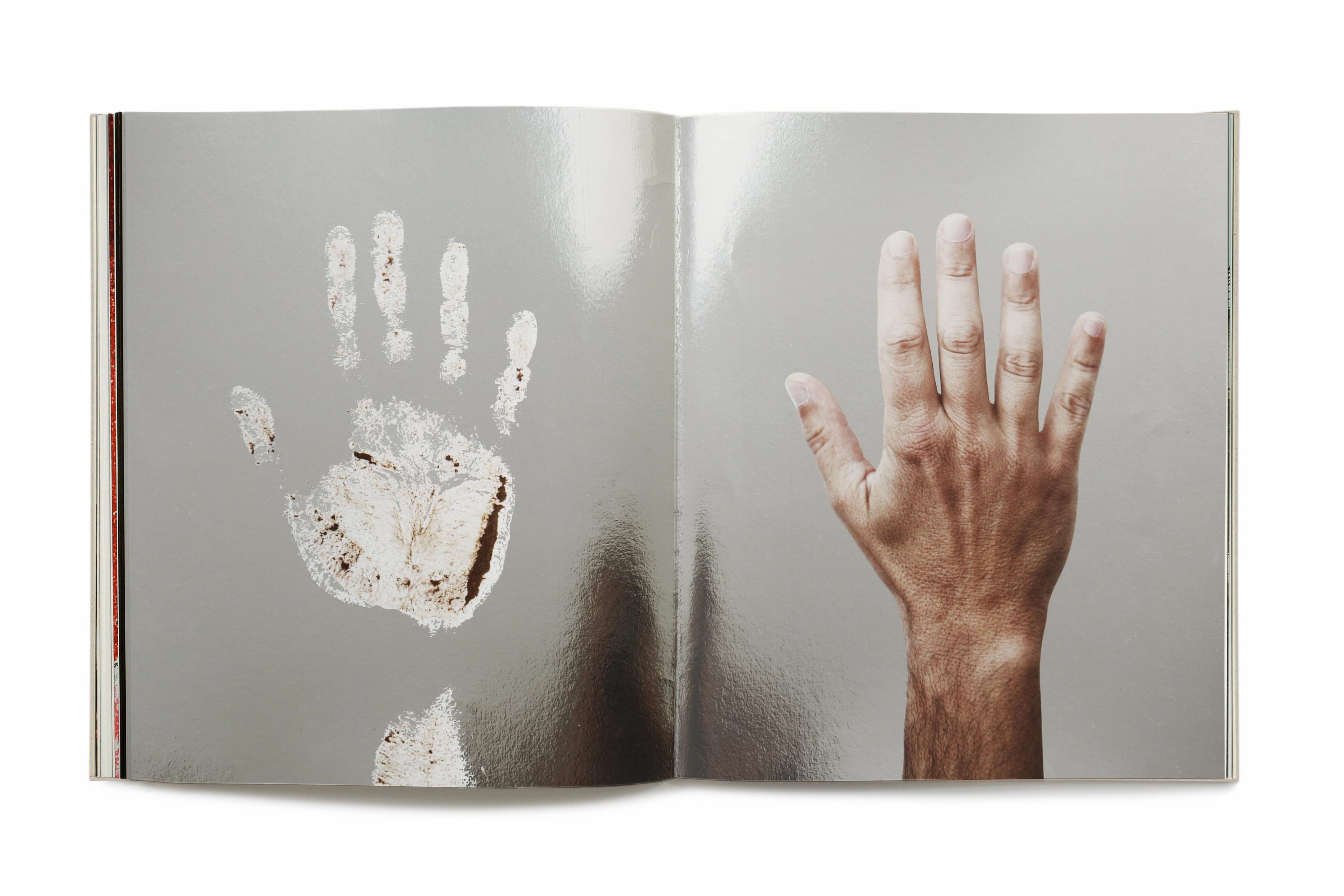
In the work of Michelangelo Pistoletto, identity is never conceived as a fixed essence but as a dynamic process of recognition and transformation. His famous Quadri Specchianti (Mirror Paintings) do not merely reflect the image of the viewer: they reveal the fundamentally relational nature of our existence. The Italian artist proposes an ontology of reflection in which identity emerges from the encounter. In his mirrors, the self does not preexist its manifestation; it comes into being in the instant of perception, in that fleeting moment when the gaze confronts its own image altered by the presence of the other. This philosophy of the mirror goes beyond a simple narcissistic metaphor to question the very foundations of subjectivity.
Pistoletto’s Quadri Specchianti extend the original intuition of the cave. The artist establishes a continuity between the caveman tracing his hand on the rock and the contemporary viewer discovering himself in the mirror of art. It is in the idea of the fourth dimension that he succeeds in representing time as no one else had ever done before. Here, identity is revealed as a trace, as an inscription in a space that precedes and transcends us.
In The Formula of Creation, Pistoletto proposes an existential mathematics where 1 + 1 = 3. This paradoxical equation reveals the fundamentally creative nature of all relationships. The two opposing units—nature and artifice, individual and collective—do not cancel each other out but generate a third reality, the Terzo Paradiso (Third Paradise). The formula transcends binary logic to think of identity as the perpetual emergence of an included third party. The artist discovers that in the Quadri Specchianti, each viewer becomes a protagonist of the work alongside the artist himself. This revelation transforms art into a social laboratory where individual identity dissolves into a creative “we.” The formula thus turns into a political project: to achieve the shared project of a new humanity, which no artist could accomplish alone. This archaeology of identity, developed throughout The Formula of Creation, suggests that we are fundamentally beings made of traces and reflections. Consequently, art becomes the privileged place where the primitive scene of recognition is perpetually re-enacted.
Credits
Michelangelo Pistoletto, La Mano Virtuale, 2024
Ink on laminated paper
©2024 Michelangelo Pistoletto
Courtesy of Fondazione Pistoletto
Cittadellarte and Galleria Continua
Laura Salas Redondo, Lo specchio non puo mai mentire, 2025
All rights reserved