
Introduction
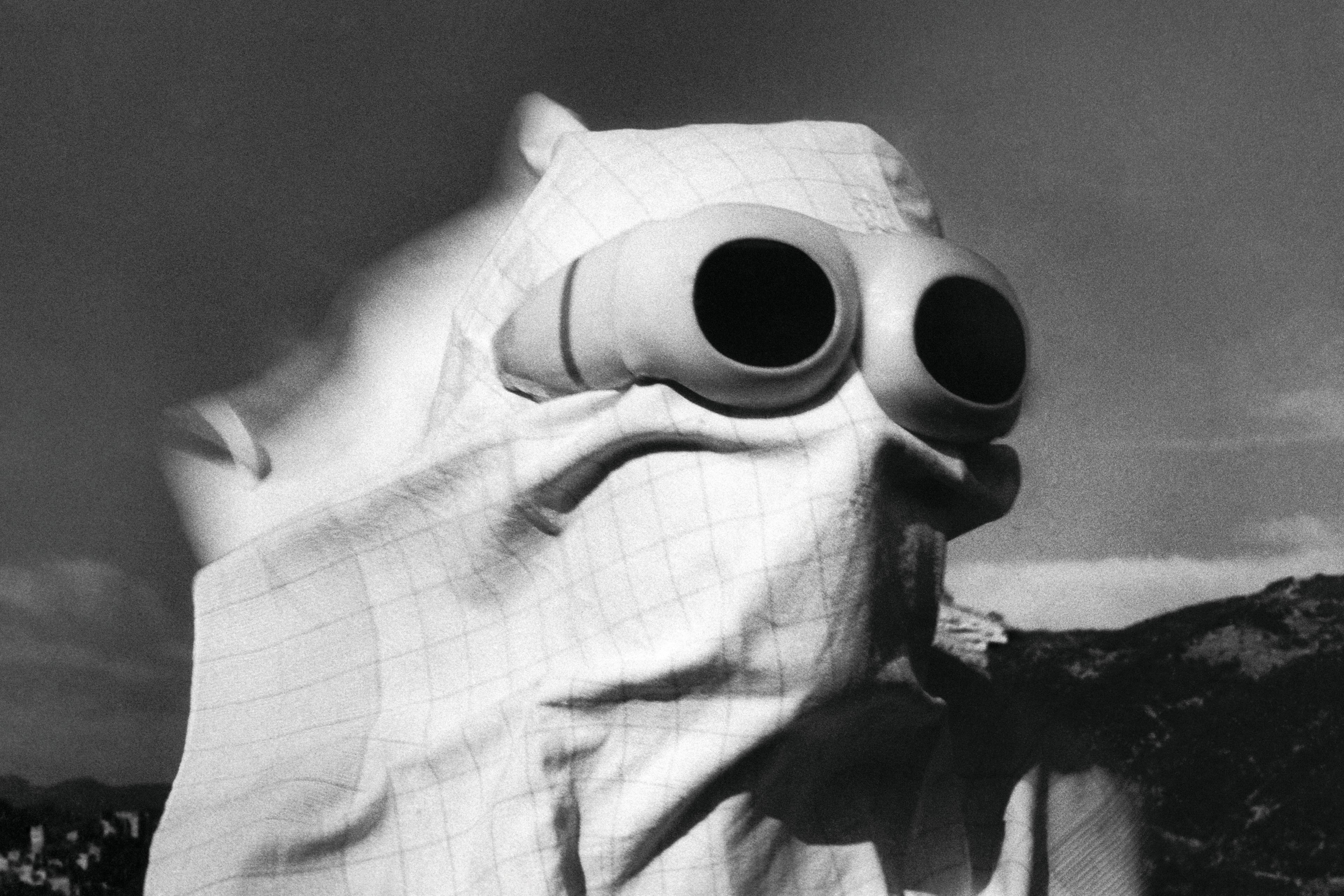
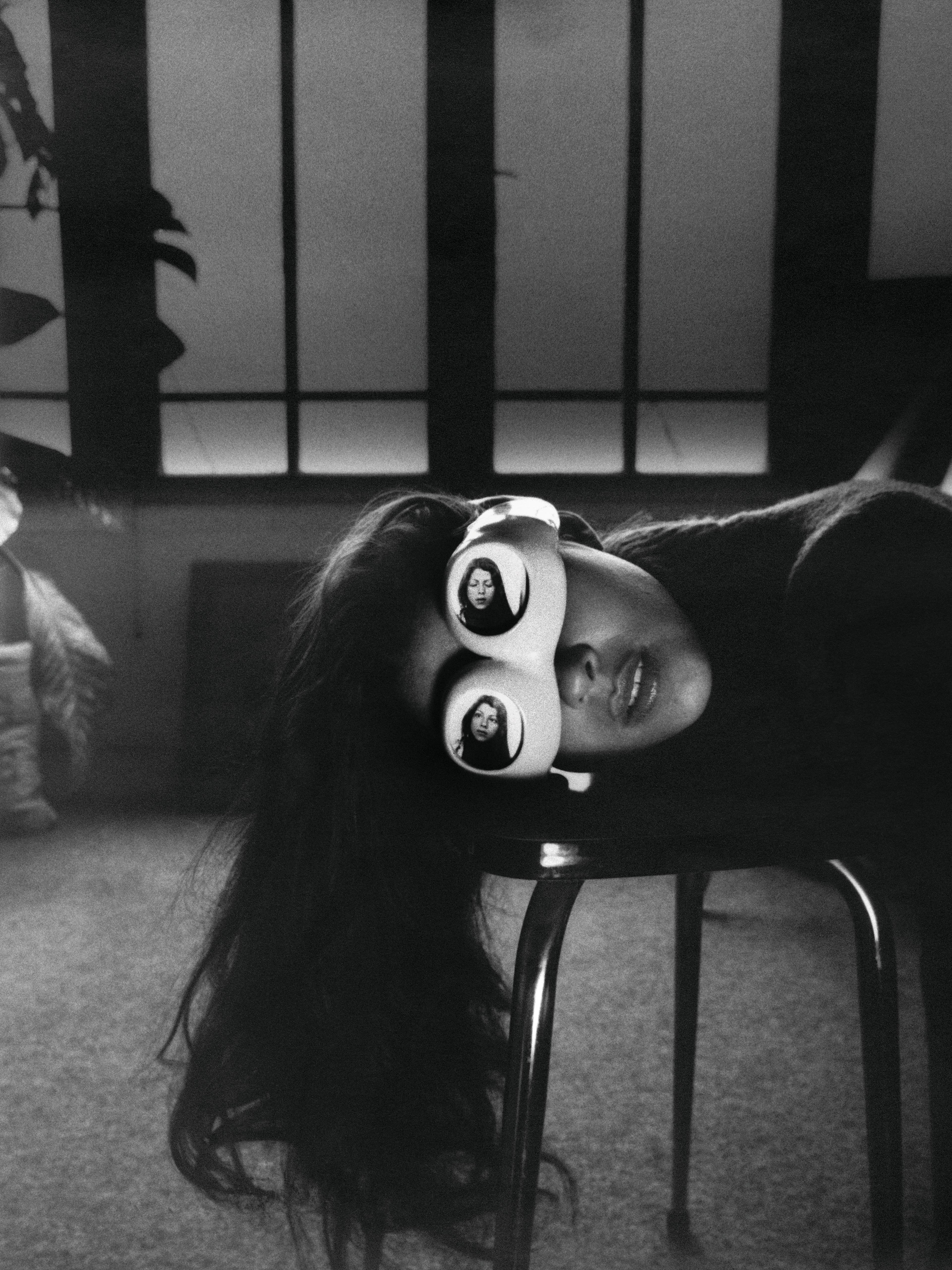
Agnès Varda and Claude Nori lived in the same building on Rue Daguerre in Paris. The young photographer showed his neighbor and friend the images of the incongruous walk of a pair of glasses that looked like legs. We are publishing, for the first time since 1976, this photographic series together with Agnès Varda’s unpublished text.
A photograph is magnificent. Every single one, a memory, a halted instant, a captured expression, an identity, a display, a portait of a moment made still, an error committed, a lie laid bare or just the simple, quiet stillness of a truth, of a person.
So, I’m a fan of photographs, the one you carry close to your heart in a tattered old wallet, the one nestling in a woman’s handbag between a social security card and a subway ticket, the one that’s placed casually on the desk of a middle manager to make a good impression, to say: look, I’m reassuring, I love my family, I’m thinking of them.
A family matter, a matter of the heart, a matter of moments — the photograph is a witness. But it spoils it somewhat as soon as there are several of them.
With photography exhibitions, books and albums, it’s more complicated; you drift from page to page, say to yourself “what pretty photos” and then your mind wanders and you think of something else. It’s often like that.
And the pretty photo means the death of the photography book because a book of images — in fact — is like a film, a photographic novel or a photo-cinema where there has to be a sense of movement or a feeling to carry us from picture to picture.
That’s what I liked about Claude Nori’s book when he brought it over to my house. It wasn’t a book yet, just some photos arranged in order. He presented them one after the other, turning them over two at a time.
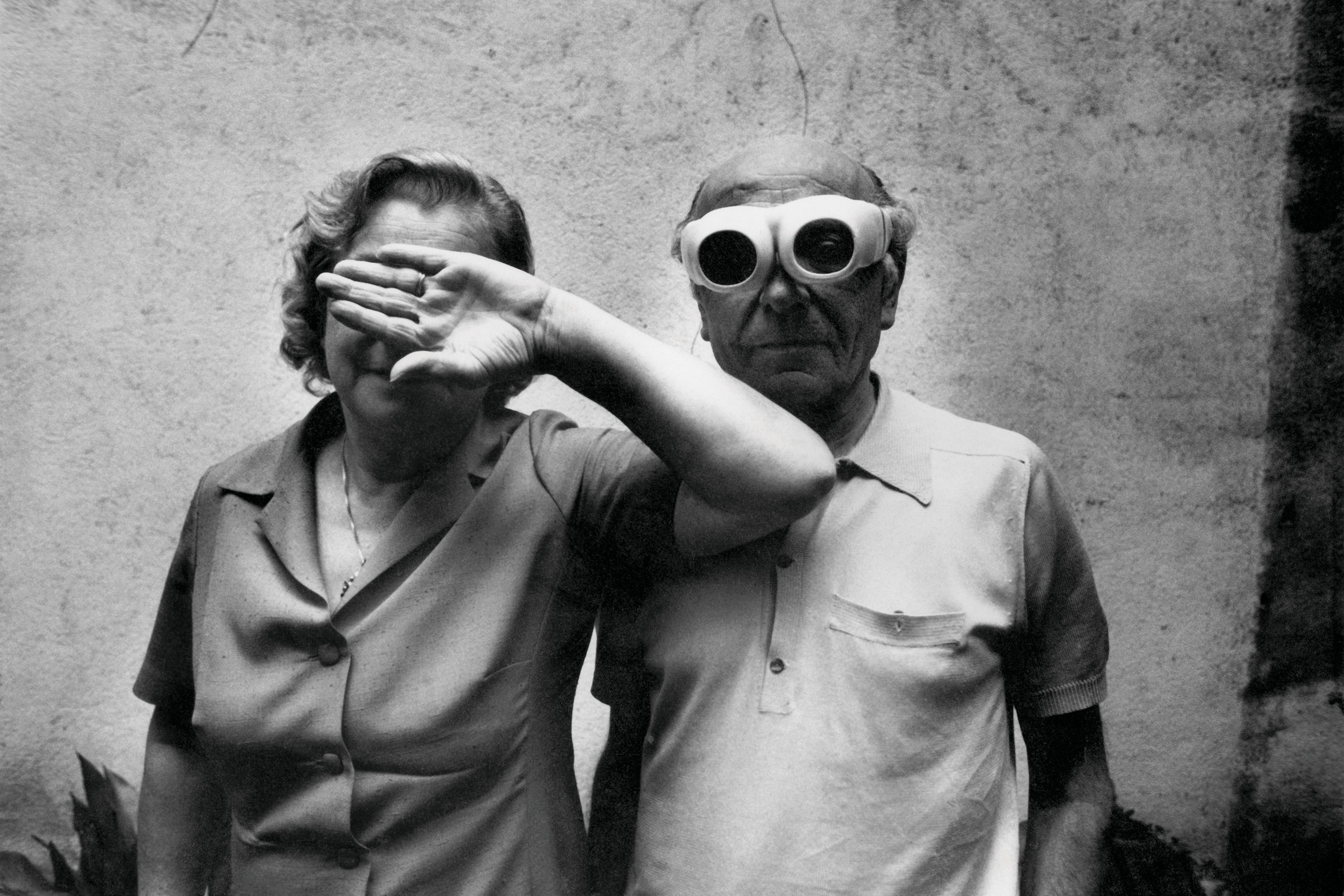
No doubt about it: these images worked in pairs. With captions that sprung immediately to mind: the elderly, the siesta, the big-headed, TV and radio, sport, family, etc.
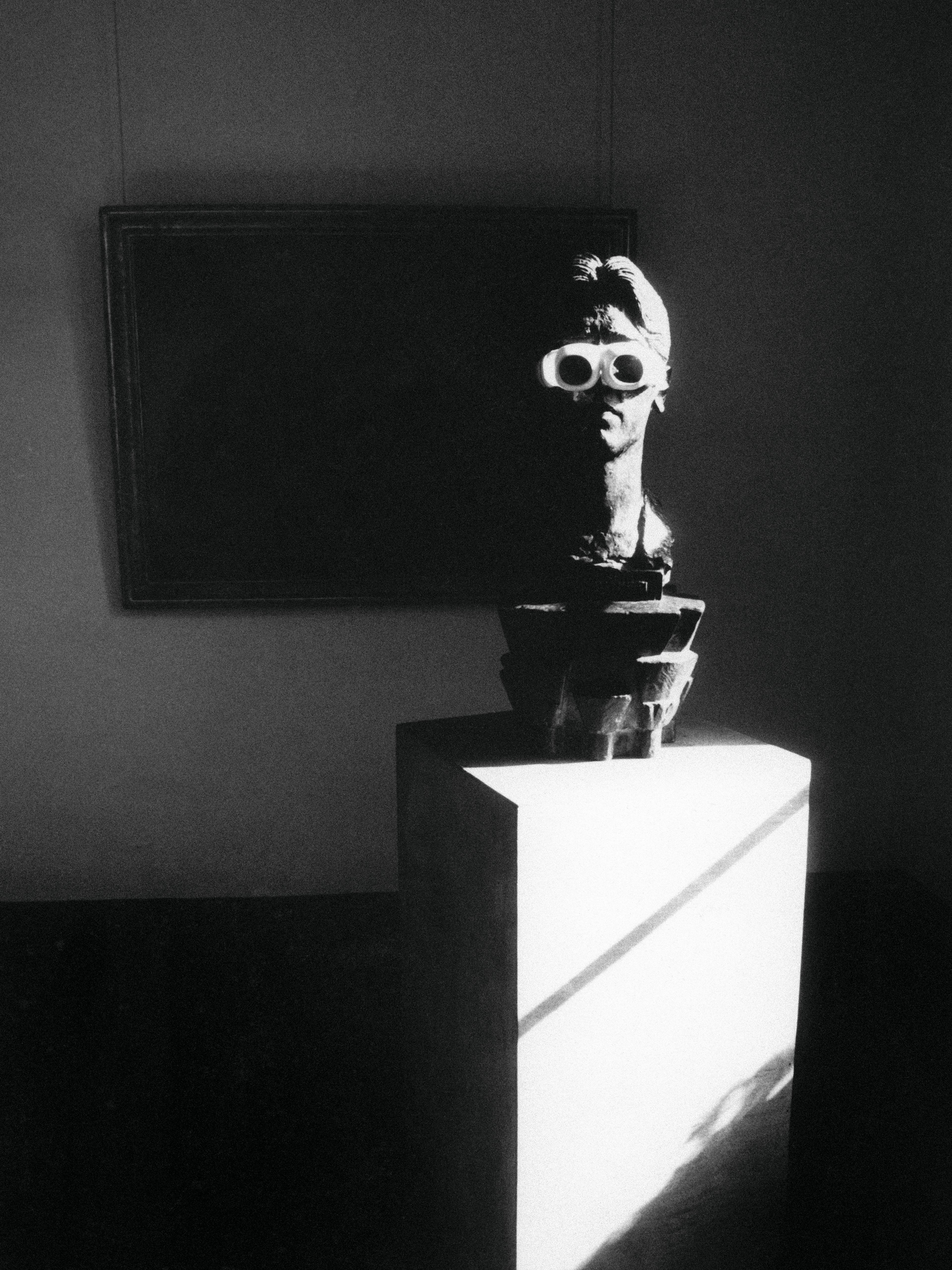
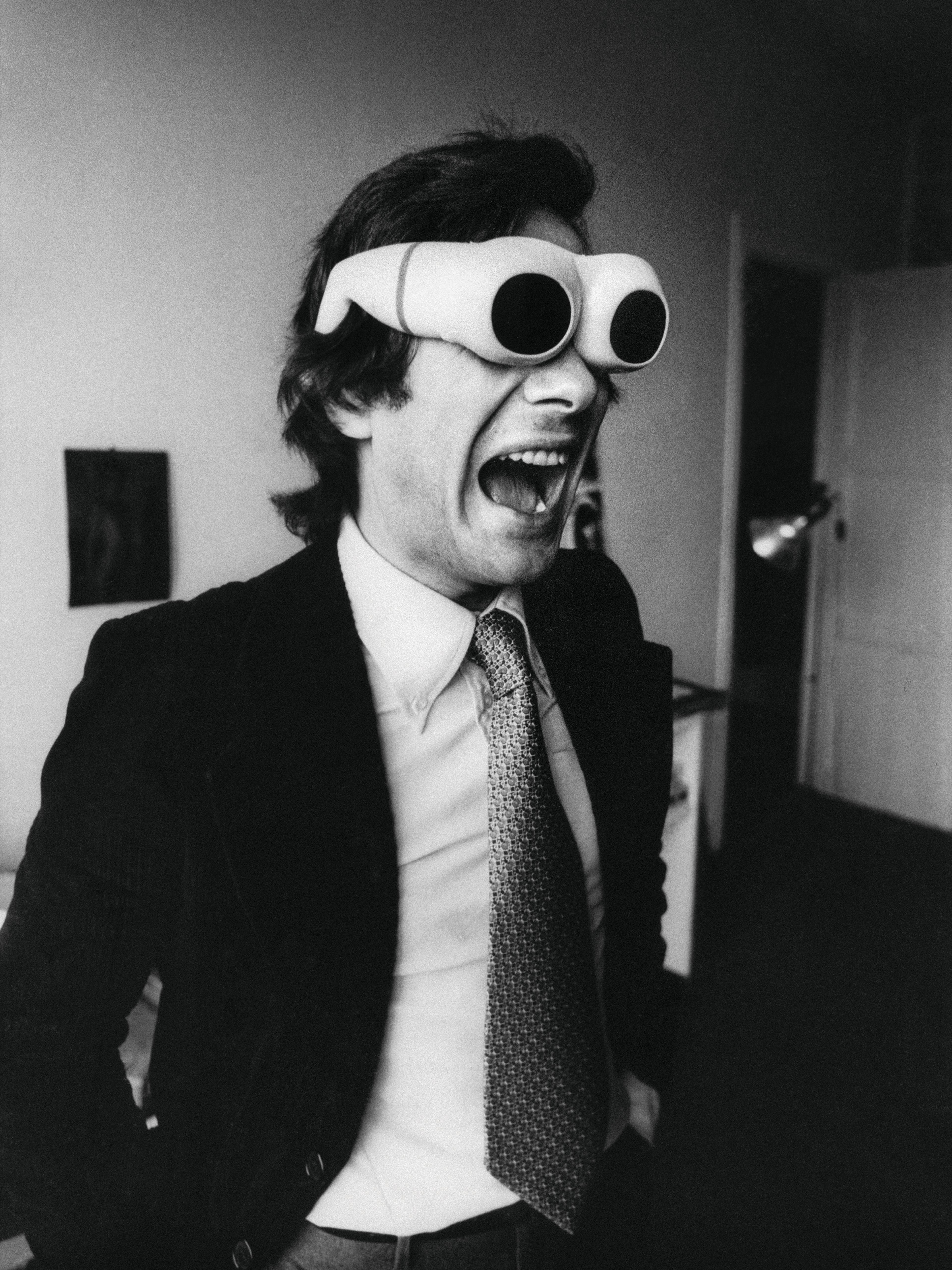
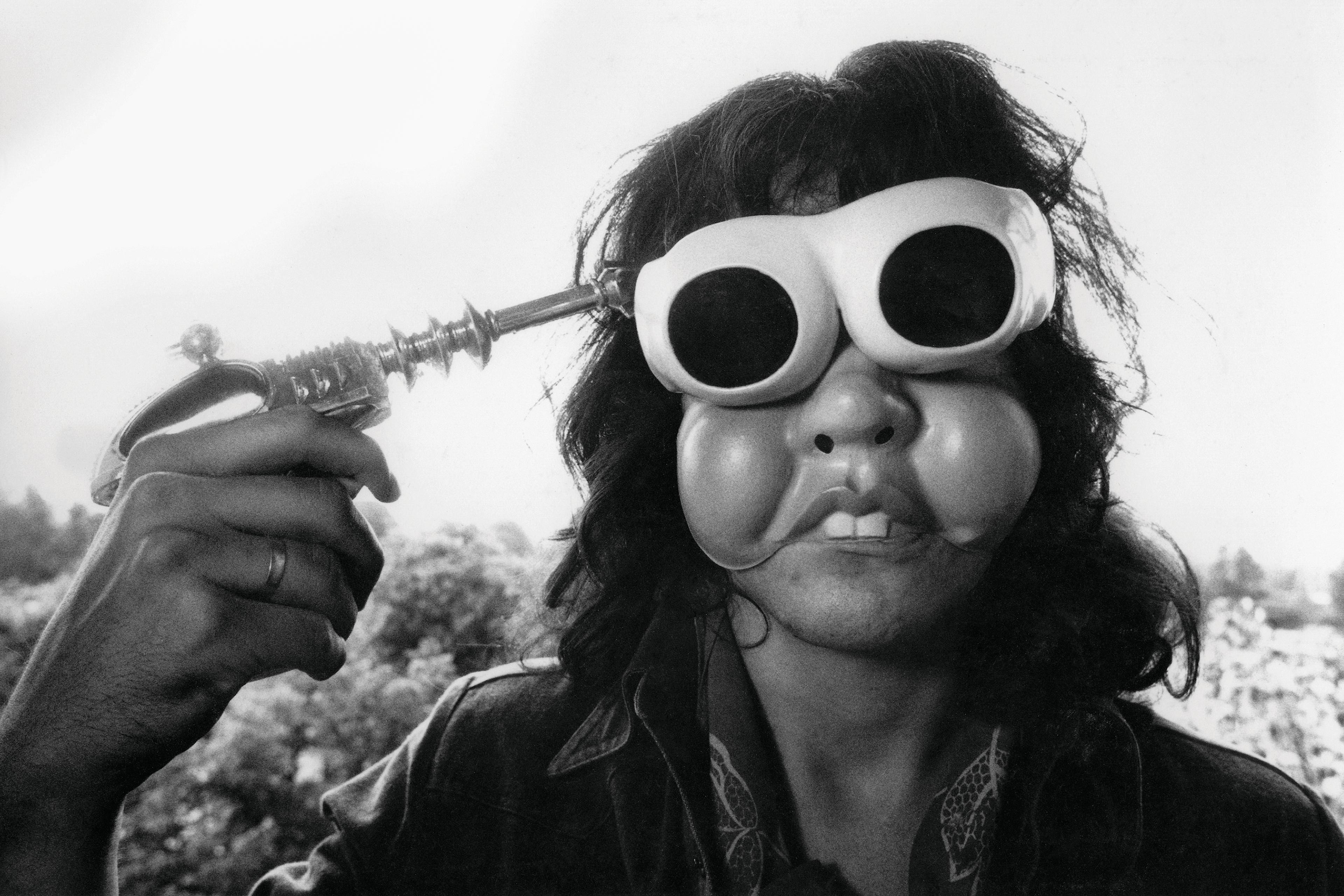
No doubt about it: this succession of images had an immediate effect on me. I was drawn in. Because all these double pages had something in common. An object, of course, an easily identified thing: a pair of spectacles, monstrous, outsized, made of whitish plastic, their lenses too black. Nothing gets through, no light, no look, not even the reflections you see on those American mirrored glasses.
There’s a whiff of death there. I know about that dark glasses trick. In Cléo, I made a little sketch: Godard saw everything in black because of his dark glasses, so the ambulance turned into a hearse. What have we here? But it’s worse here, there’s a whiff of debauchery as well as death. Claude Nori’s spectacles have no arms, but they have legs! Like the legs on those little dolls they sell at the Casino de Paris for the men who like to fondle them during the interval.
Oh yes! Some glasses they are! Awful things!
I wondered and yet didn’t dare ask the question: did Claude have those glasses made for him? I think he did.
They are an object of fantasy. And quite right, too.
So, what we have here is a pair of spectacles that strolls through a book of photographs. The stroll is a riddle, as they say at school. A sign, as they say at university. Suspense, as they say at the cinema.
Find the spectacles. You scour the image but forget to look at it, it’s amaz-ing. It reminds me of those little cards from the the grocery that we used to be given as a reward or a freebie. You could see a tree, a rifle propped against it, a dog waiting, and the words: find the hunter! And you had to search, scour the scene, turn the image round. And then, among the leaves of the tree, if you held the card at an angle, you could make out the head of the hunter.
Here, it’s a game: find the spectacles! They are hidden on a face among some concertinaed ID photos. They’ve been left on the side of a bathtub, on a Louis XIII sofa, a Louis XIV suit of arms, on a Louis XV bust, left behind among other objects that aren’t Louis anything, forgotten, lost. Nobody really believes in these forgettings or losses, and very soon you start to wonder about the string-puller, the director.
Because he has taken this perversion so far as to seek the fourth degree of hiding places. For example:
1. He puts on the glasses.
2. He records himself on videotape.
3. He plays the film on the television.
4. He photographs the television set on which his own face appears, wearing the glasses.
This is what I call a closed-circuit riddle. For his face is not, after all, familiar to the reader, and I can only explain all this because I know Claude Nori.
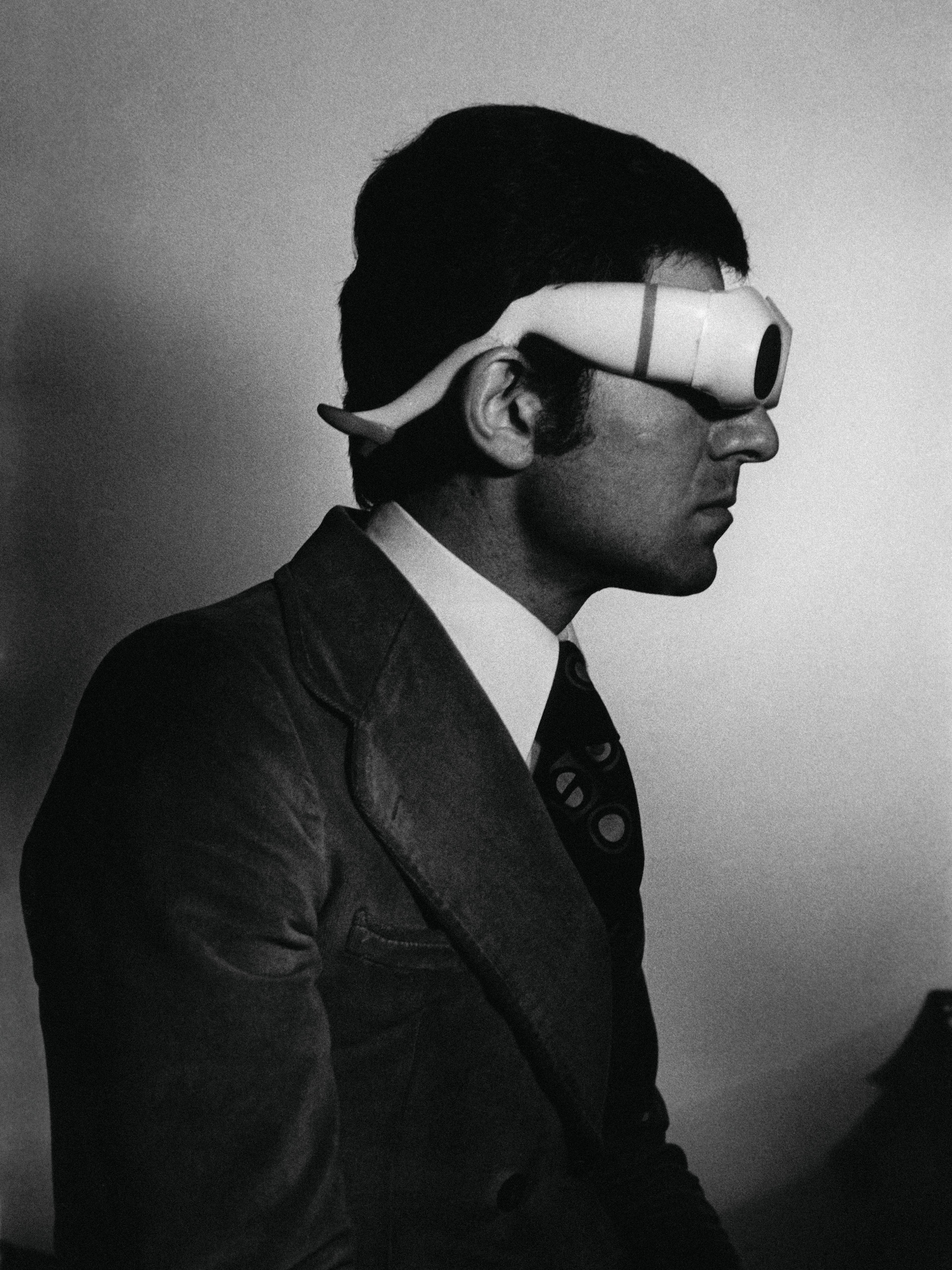
He was shy and had made some double-exposed images. I liked that. He would come round from time to time, use my lab for a while and show me his photos. They were better and better. Because he was delving deeper into his own ideas and made no attempt to compromise. I liked that as well.
His early methods made me think of those of Guy Bourdin, in his bedroom, doggedly working to find his style before going out to face the world.
One thing that is particular to Claude is that he doesn’t try to make beautiful pictures. He doesn’t care if there’s the edge of a radiator on the edge of the picture, or the hint of a mess that upsets the background, or a reflection of a lamp in the window. The art of letting things be, he has it. He aims to narrate an impression, he is neither purist nor reporter, he is a storyteller.
He tells us of his troubles by means of a troubling object.
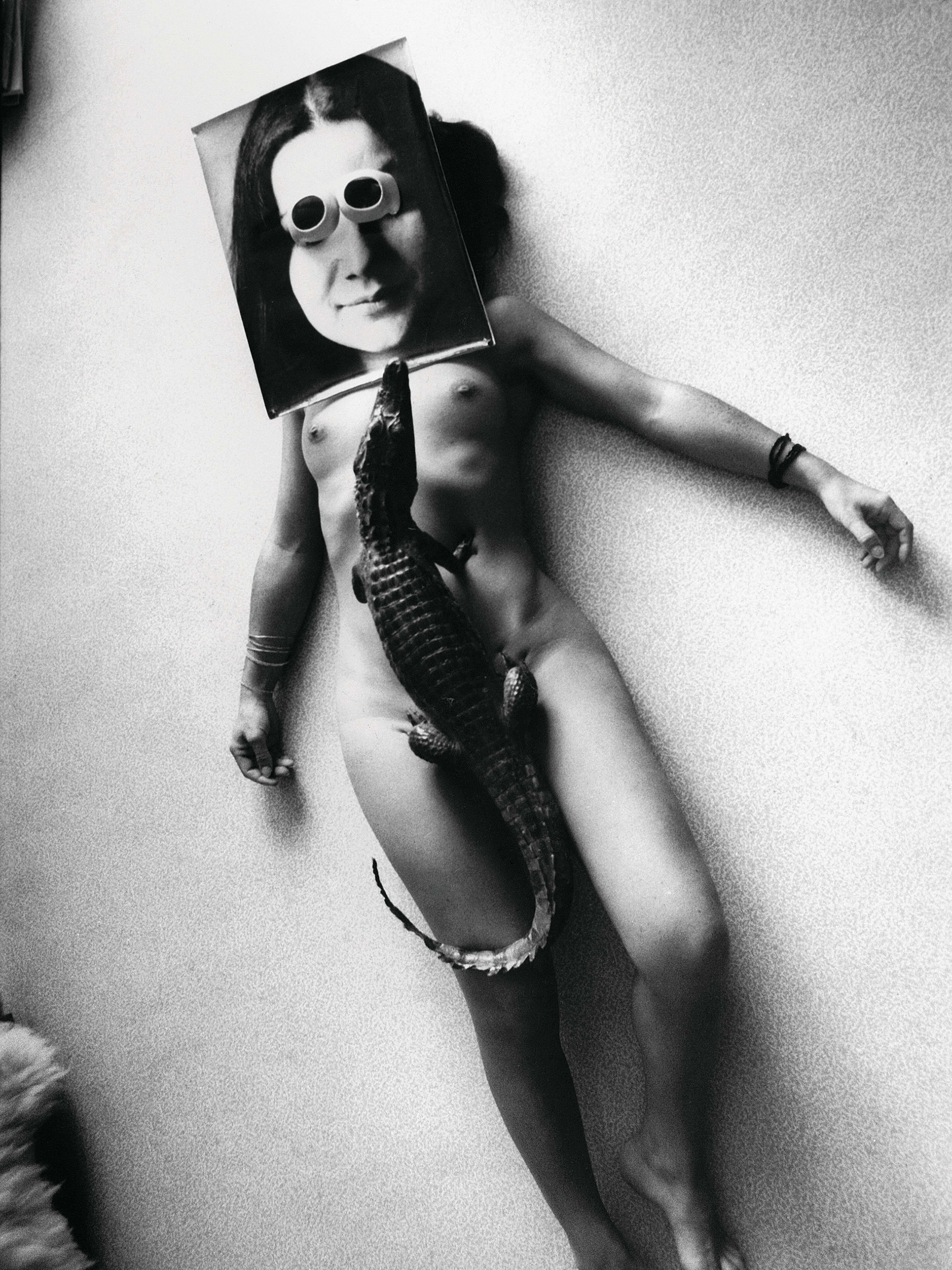
And he overwhelms us with picture games and word games: the bride is in white, she has black hair, she deserves the white-framed dark glasses! In French, we have an expression: “Lace up your spectacles!” And so, the spectacles are on her feet! Yes, but look: the feet are where the groom’s head should be in the nuptial bed! An erotic photo? No. It’s still a game. Here’s another word game: a big-headed woman has big glasses! Naturally! So, she has a blown-up photograph of her face where her actual face should be. And here’s another picture game: a naked man puts the glasses on his penis instead of on his nose. In French, we say, “It sticks out as clearly as a nose in the middle of a face,” as a penis in the middle of a body.
Stock expressions, mental images, Nori cobbles things out of all that stuff, amuses himself by blurring boundaries, disguising women’s bodies, dressing them in shadows, trays, stuffed animals. As if the glasses idea trumped all other ideas. It’s a game. And he’s playing it.
Only the game is getting tighter. Tightening around the throat, too.
Though we smile before the sports pages that show us a superman flexing his biceps of steel on which he holds the plastic glasses, or a yogi whose eyes — including the third eye — we can’t see, sitting on a tennis court on which we can’t see any balls, or a swimmer who doesn’t float wearing the glasses, which show no drops and no mist, in a swimming pool with no water.
And though we find these human insects curious as they crouch down in enclosed landscapes or cling to concrete posts, we begin to find them invasive, the legs sticking out from behind the post and then the legs that are spread-eagled. The smooth thighs of a bather, like the legs of the spectacles, like the poles on a crossbar, like the black stockings of a woman upside down on a bed.
And we start to find those masked, blank, black expressions upsetting: this invasion of absence or of intervening mirrors, rear-view included. Looking backwards? Retro? The clownish prostitute certainly is, and so is the idea of the wax mannequin.
But how worrying that robotic-breast parking meter is, and how terrifying the little girl, the only eyes in all the book (aside from the wedding guests).
Yes, the game is not much fun anymore. It’s truly suffocating. There’s a guy who’s screaming (a guy whose tie is uncomfortable maybe) (just as the naked man with the fig-leaf spectacles was screaming) in front of someone gasping for breath under a piece of cloth — out in the open air. And then a mask commits unhumorous suicide, and an unseeing Ophelia drifts out into unpoetical black waters.
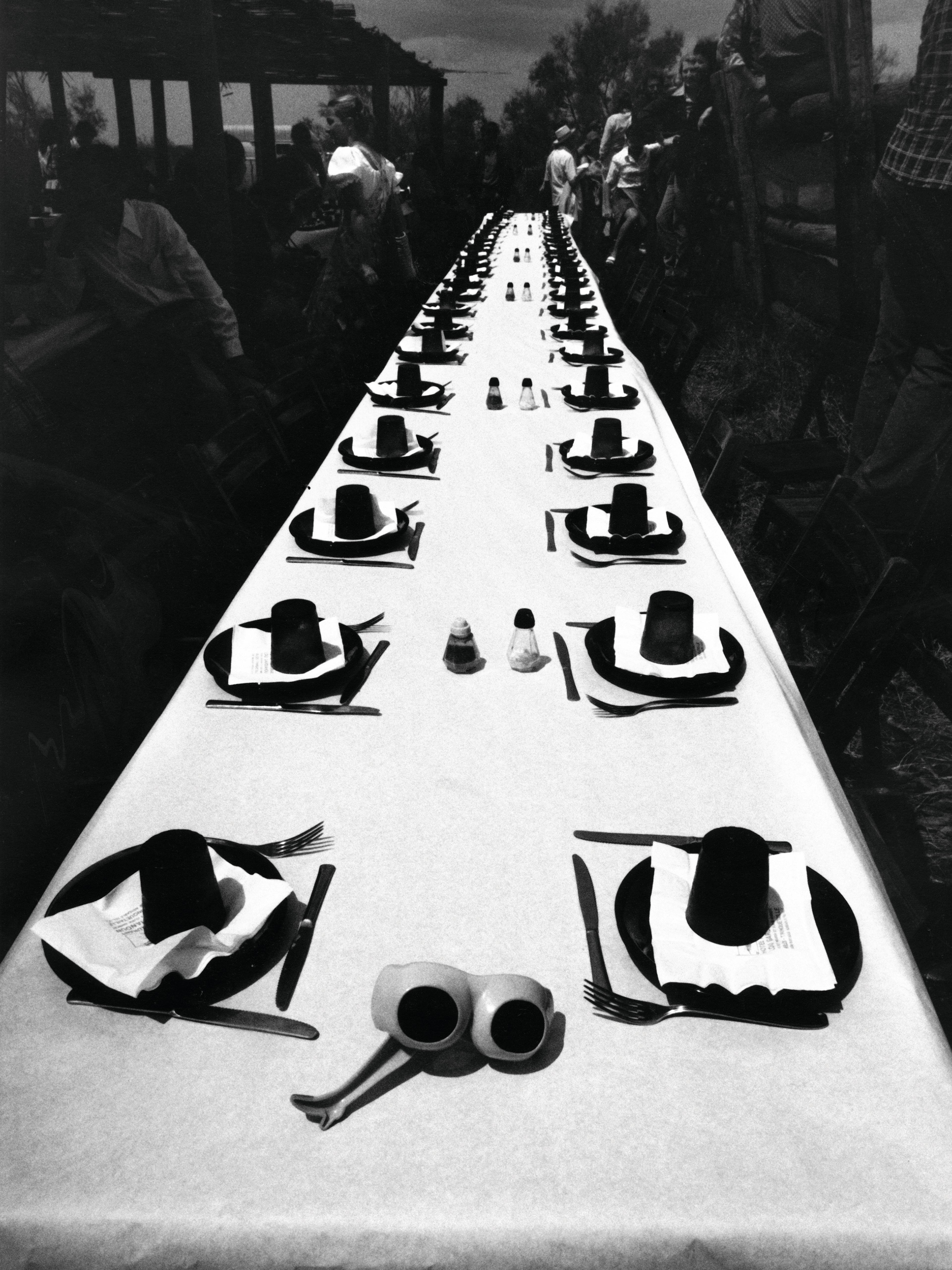
And, in fact, poetry has died. The mourning meal took place at dusk, the glasses at the banquet were blacker than the lenses on the spectacles. Claude Nori knows it. He was there at the funeral.
A final, complicated image in which the shadow of the photographer, standing tall in the kingdom of shadows, salutes the pair of spectacles lying on a tombstone engraved with a Latin inscription.
His gesture — the professional gesture of the photographer who puts his camera in front of his eyes — is still the gesture of someone putting on his glasses. We are going round in circles. There is no way out. The game is up. Claude Nori has outdone us. This shy man, he really is good.
Crédits
Photography by Claude Nori, Lunettes, 1976
© 1976, Claude Nori
All rights reserved
Text by Agnès Varda, Lunettes (1976)
© Succession Agnès Varda All rights reserved
Translated into English by Edward Witcomb