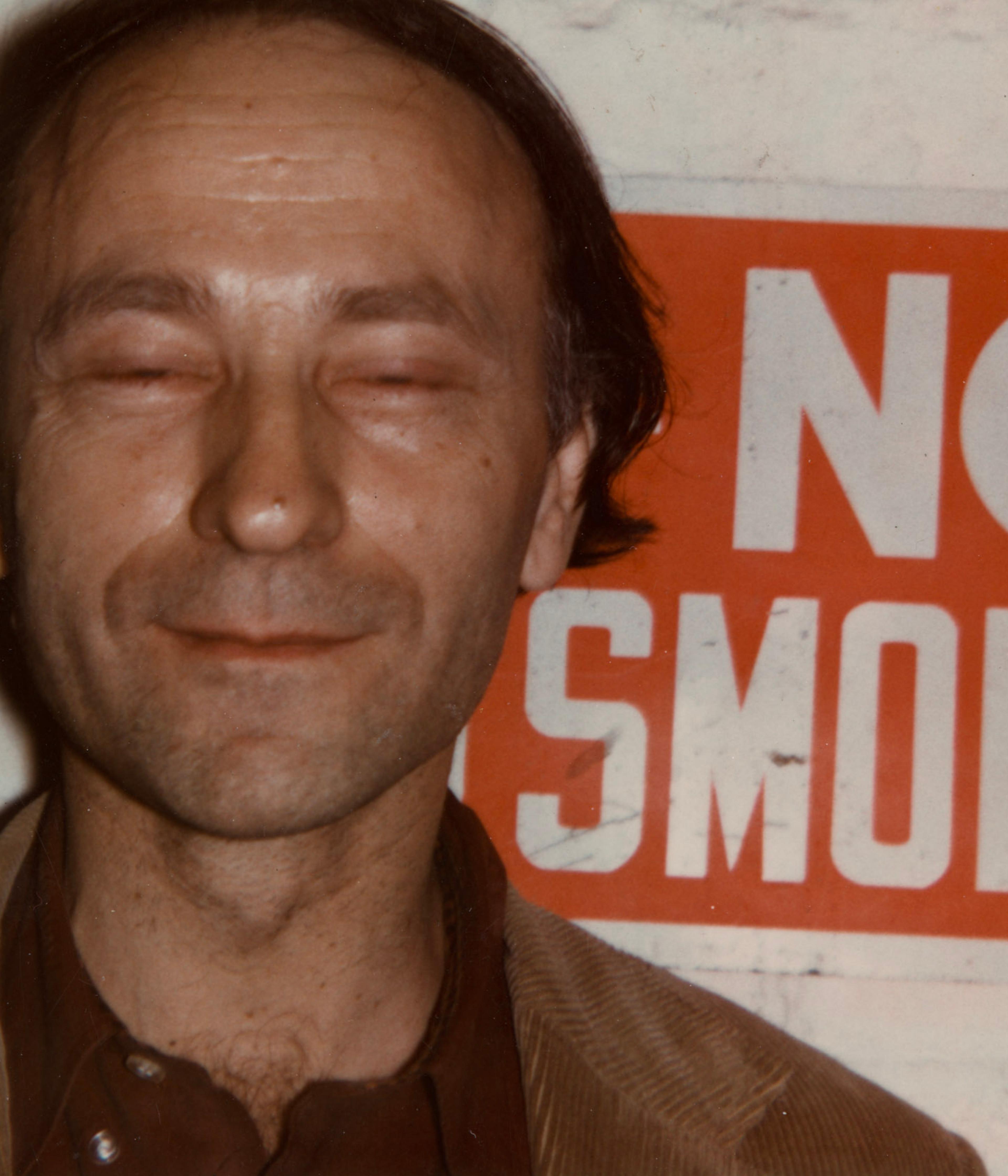
Jonas Mekas
Jonas Mekas (1922–2019) was a Lithuanian-American filmmaker, poet, and archivist who arrived in New York in 1949 as a displaced person and spent the following decades building both an art and an infrastructure for forms of cinema that the mainstream had no place for. Born in Semeniškiai, Lithuania, he was imprisoned in a Nazi labor camp during the Second World War, escaped, and spent four years in displaced persons camps in Germany — where his sustained encounter with film took hold.
In 1954 Mekas co-founded Film Culture magazine with his brother Adolfus, and in 1958 began writing his "Movie Journal" column for the Village Voice, where he championed what he called the New American Cinema. In 1962 he established the Film-Makers' Cooperative, and in 1964 the Film-Makers' Cinematheque, which grew into Anthology Film Archives — one of the largest repositories of avant-garde film in the world. Through the 1960s he mounted anti-censorship campaigns in defense of films by Jean Genet and Jack Smith, with public support from Jean-Paul Sartre, Simone de Beauvoir, Norman Mailer, and Susan Sontag. His own films, made on handheld 16mm cameras in a lyrical, diaristic mode, include Walden: Diaries, Notes and Sketches (1969), Reminiscences of a Journey to Lithuania (1972), and Lost Lost Lost (1975) — associative meditations on memory, friendship, exile, and the texture of daily life among the artists and filmmakers of New York, including figures from Fluxus and the circle of Andy Warhol.
The Brig (1963) received the Grand Prize at the Venice Film Festival, and Mekas's films and archival material were exhibited at the Whitney Museum, Documenta 11, and the 51st Venice Biennale. He received the Lithuanian National Prize in 1995 and was named Commandeur de l'Ordre des Arts et Lettres by the French Ministry of Culture. A poet whose Lithuanian verse has entered that country's literary canon, he published more than twenty books of prose and poetry.